
Highway variable message signs operate in some of the most unforgiving environments on earth. Relentless solar radiation, exhaust soot, freezing temperatures, and mechanical vibrations threaten electrical and optical components. Road operators cannot afford unexpected blackouts or diminished legibility during severe weather emergencies.
Meeting statutory safety mandates requires equipment engineered beyond standard commercial tolerances. European standard EN12966 establishes the formal benchmark for dynamic traffic message signs, enforcing strict criteria for optical legibility, environmental endurance, and structural integrity. Durability under this standard reflects the intersection of resilient materials and optical physics.
Environmental Rigors and the EN12966 Durability Baseline
Regulatory testing under EN12966 subjects intelligent signage to aggressive stress simulations before field deployment. Highway authorities require proof that dynamic signs maintain luminance, contrast, and color chromaticity through seasonal extremes. Engineering outdoor displays for intelligent transport systems involves satisfying temperature classes ranging from T1 down to severe T3 environments.
Standard commercial testing rarely accounts for corrosive automotive emissions mixed with continuous highway moisture. Laboratory evaluations for certified signs include salt mist exposure, damp heat testing, and forced dust ingress. Passing these assessments ensures dynamic messaging remains legible when drivers face blinding rain or coastal fog.
Optical endurance represents the most demanding aspect of the standard. Luminance intensity must remain balanced against strict contrast ratios across decades of exposure. Without specialized surface design, road grime and solar reflections wash out critical warnings, creating acute hazards for approaching drivers.
Preserving Optical Performance Against Photodegradation and Soot
Solar radiation degrades conventional plastic front faces, turning transparent protective barriers yellow and brittle. Such deterioration scatters light, collapses contrast ratios, and forces roadside operators to overdrive LEDs to maintain visibility. Delivering an effective sunlight readable display without pushing LEDs past thermal limits requires innovative optical beam steering.
Chainzone’s optical lens design directs LED light toward the intended viewing area and can help reduce unnecessary light emission. The actual beam distribution and UV resistance depend on the materials and specifications of the selected product. Chainzone’s LOB technology uses optical lenses over individual LEDs to help protect them against direct exposure to moisture, UV radiation, dirt, and physical impacts. The smooth display surface may also simplify cleaning, although maintenance requirements depend on the installation environment.
Preserving color coordinates over extended lifespans is equally essential. Severe sunlight easily shifts red and amber wavelengths outside regulated chromaticity boundaries. Encapsulating surface-mount LEDs beneath optical polymer prevents ultraviolet degradation, preserving crisp warning symbols throughout years of uninterrupted roadside operation.
Structural Sealing and Thermal Mitigation Under Temperature Extremes
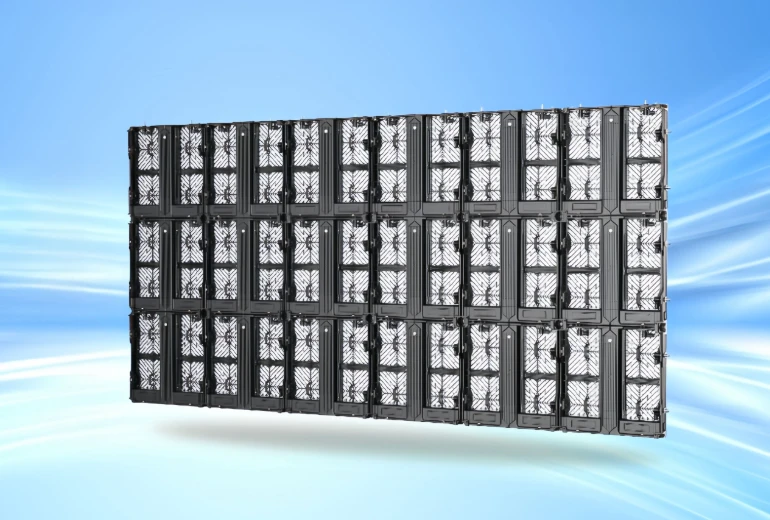
Our engineering team at Chainzone qualifies enclosures under rigorous climatic test standards to guarantee complete IP65 or higher environmental protection. Powder-coated aluminum cabinets block fine particulates, corrosive road salts, and driving rain from reaching sensitive driver electronics. Maintaining an impermeable barrier prevents premature circuit corrosion and short circuits.
Managing internal thermal buildup determines whether electronic driver modules survive multi-year deployments. Unlike conventional outdoor displays that rely on internal air circulation that pulls in polluted air, closed-loop thermal designs dissipate heat purely through conductive chassis architecture. Heat sinks channel heat away from processing units and power supplies passively.
Operating temperatures directly dictate the rate of diode lumen depreciation. High heat accelerates silicone degradation and dims LED brightness. Utilizing high-efficiency optical lenses allows our systems to generate equivalent optical output at significantly reduced electrical power, inherently preventing internal heat generation and slowing aging.
Real-World Roadway Deployment Across Critical Transport Corridors
Demanding motorway applications test sign reliability daily under high-speed traffic flows. Whether managing dynamic speed limits or warning of collisions ahead, deploying an overhead sunlight readable display ensures drivers recognize lane closures hundreds of meters prior to obstructions. Instant readability prevents rear-end collisions during sudden traffic decelerations.
Suspension bridges and coastal causeways expose signage to relentless crosswinds, moisture condensation, and corrosive ocean salt spray. Certified structural resistance guarantees that enclosures withstand high wind loads without metal fatigue or seal compromise. Reliable ingress protection keeps sensitive power units functional throughout typhoons and coastal blizzards.
Congested toll plazas and highway interchange bottlenecks benefit substantially from dynamic message guidance. Electronic displays optimize lane assignments, announce fluctuating toll rates, and steer traffic during active construction zone shifts. Instantaneous message switching combined with anti-glare surfaces delivers clarity during early morning sunrise or afternoon glare.
Urban transit corridors and municipal smart city networks deploy these displays for parking guidance and arterial incident management. Through Chainzone diagnostics and automated luminance feedback, central controllers monitor sign health remotely without dispatching maintenance crews. Integrated ambient sensors continuously calibrate luminance, preventing dangerous night glare while conserving power.
Calculating Value Through Lifecycle Reliability and Low Thermal Stress
Procurement authorities increasingly evaluate ITS infrastructure through the lens of whole-life asset costs. Field interventions on elevated highway gantries require expensive lane closures, police escorts, and specialized bucket trucks. Choosing signage certified to rigorous durability benchmarks drastically reduces unscheduled roadside maintenance calls.
Energy consumption is a major long-term cost for highway operators. CHAINZONE’s Lens on Board (LOB) technology optimizes light distribution to reduce power consumption by up to 80% compared with traditional SMD outdoor displays, helping lower electricity costs. Its lens protection and reduced heat generation can also help extend display service life and reduce maintenance costs.
Redundant hardware architectures further shield operators from catastrophic system outages. Equipping dynamic message signs with dual power supplies and mirrored data pathways guarantees continuous message delivery if a localized component fails. Smart public transport operators evaluating outdoor displays for mission-critical corridors prioritize this built-in resilience.
Investing in certified durability converts dynamic traffic hardware from a maintenance liability into dependable public safety infrastructure. Robust engineering, patented optical protection, and intelligent thermal management ensure message signs remain resilient across decades of harsh weather exposure. Highway travelers receive reliable warnings, while municipal authorities achieve predictable lifecycle performance.


