
A variable message sign (VMS) is an electronic traffic sign that displays changeable information for road users. Also called a dynamic message sign (DMS) or changeable message sign (CMS), a VMS helps traffic operators communicate real-time warnings, route guidance, lane status, speed information, travel times, and incident updates.
Unlike static road signage, variable message signs can be updated through local or remote control systems. This makes VMS an important part of intelligent transportation systems (ITS), especially where traffic conditions, weather, roadworks, or emergencies can change quickly.
For traffic engineers, system integrators, road authorities, contractors, and infrastructure operators, the right VMS solution must balance visibility, message clarity, traffic-system compatibility, environmental reliability, and maintainability.
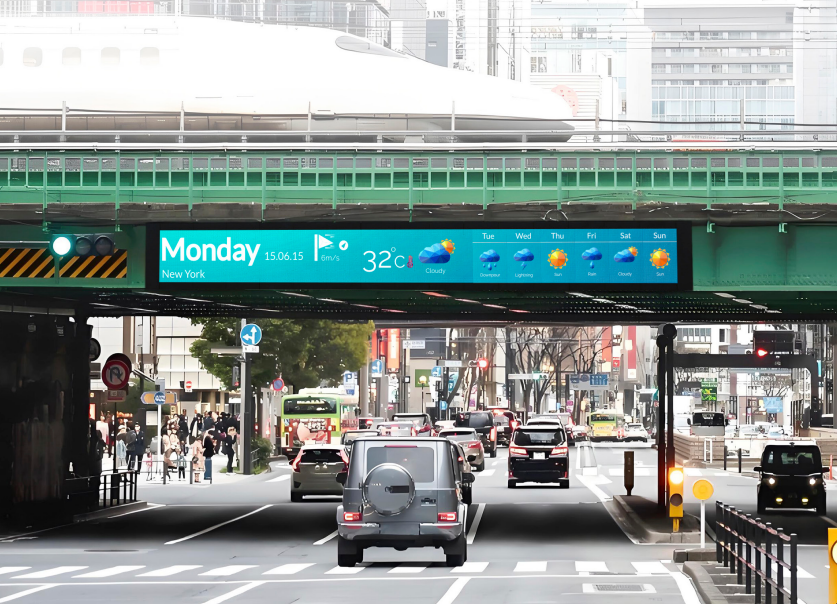
Picture shown: Chainzone mini LOB VMS. Explore the complete traffic product range and project references in the Intelligent Traffic Product Brochure.
What Does VMS Mean in Traffic Management?
VMS stands for Variable Message Sign. It is a programmable LED sign designed to display changing text, symbols, pictograms, arrows, and traffic-control information.
A variable message sign can communicate information such as:
- Congestion, delays, or incident warnings
- Lane closures and diversion instructions
- Reduced-speed notices
- Roadworks and temporary traffic-control messages
- Weather-related warnings
- Tunnel entry status and safety instructions
- Toll rates, parking availability, or travel-time information
- Emergency alerts and evacuation guidance
- Event-related traffic instructions
In simple terms, VMS helps road operators deliver the right information at the right location and time. Clear, timely messages can help drivers make safer decisions before reaching a disruption or critical road section.
How Do Variable Message Signs Work?
A VMS combines an LED display, a controller, communication equipment, power components, a protective cabinet, and a traffic-management interface.
The process normally follows four steps:
1. Traffic data is collected.
Traffic centers may receive information from cameras, road sensors, weather stations, radar, police reports, tunnel systems, or operational staff.
2. Operators or automated systems select a message.
The traffic-management platform determines whether to show a warning, lane instruction, speed message, detour, or other approved content.
3. The control system sends the message to the VMS.
The command is transmitted through a communication network, such as fiber, Ethernet, cellular connectivity, or other project-specific infrastructure.
4. The VMS displays the message to drivers.
The LED sign presents the approved text or symbol. Its brightness-control system can adjust light output for changing ambient conditions.
For this reason, a VMS should not be treated only as an outdoor LED display. It is a connected road-communication device that needs to work reliably with the wider traffic-control environment.
Types of Variable Message Signs
VMS systems are available in multiple formats to support fixed infrastructure, temporary works, mobile response, and lane-management applications.
| VMS Type | Typical Use | Key Consideration |
| Fixed roadside VMS | Highways, arterial roads, urban corridors | Suitable for permanent traffic messaging and long-term network operation |
| Overhead or gantry VMS | Motorways, multi-lane roads, toll areas | Supports lane-specific or high-visibility messages above the roadway |
| Trailer-mounted VMS | Work zones, temporary diversions, events | Allows flexible deployment and relocation |
| Vehicle-mounted VMS | Road maintenance, emergency response, mobile operations | Delivers warnings and guidance from a moving or parked service vehicle |
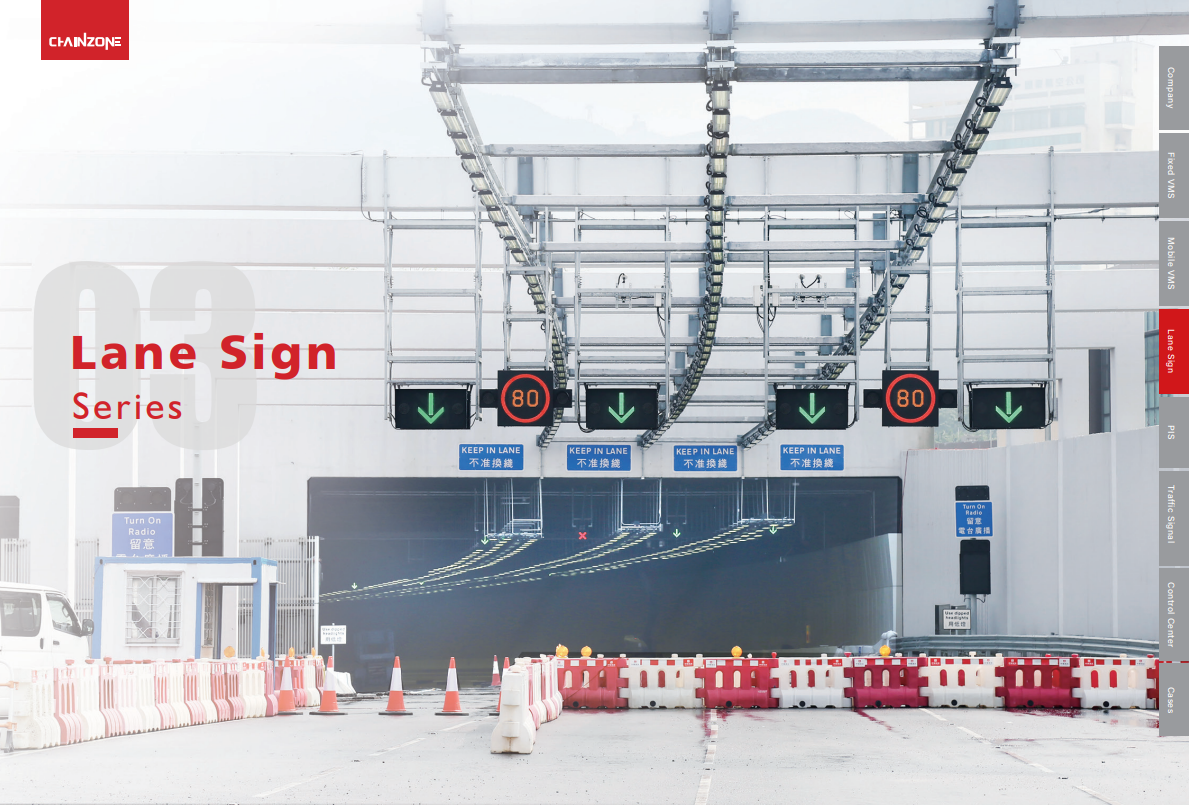
| Lane control sign | Tunnels, managed lanes, toll plazas, expressways | Provides lane-open, lane-closed, merge, or directional information |
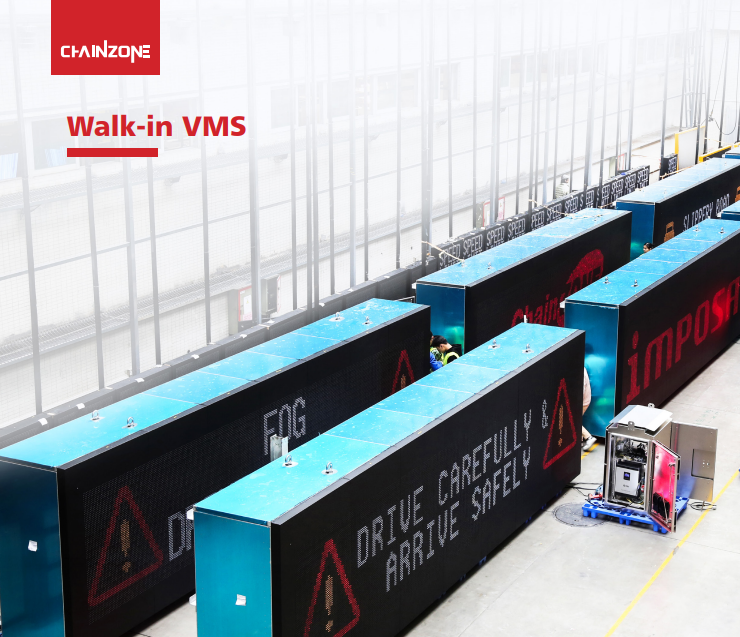
| Walk-in VMS | Large roadside installations | Enables internal maintenance access for certain large-format configurations |
A project may require more than one sign type. For example, a tunnel system may combine approach-road VMS, lane control signs, in-tunnel guidance displays, and centralized software management.
What Technical Factors Affect VMS Performance?
A VMS needs to remain legible in bright sun, rain, darkness, high-speed traffic conditions, and other challenging environments. Traffic engineers should evaluate specifications in relation to the actual installation site rather than selecting products based only on a general product sheet.
Key technical factors include:
- Luminance and brightness control: The sign should remain visible in daylight while avoiding excessive nighttime glare. Automatic brightness adjustment can help align output with ambient light conditions.
- Contrast and legibility: Drivers need to recognize messages quickly. Contrast, color, character size, viewing angle, and message layout all influence readability.
- Pixel pitch: Pixel pitch should match the required viewing distance and message type. A smaller pixel pitch is not always necessary for long-distance motorway applications.
- Cabinet construction: The enclosure should protect internal electronics from dust, water, humidity, corrosion, and other local environmental factors.
- Heat management: High-temperature environments may require carefully designed ventilation, cooling, power management, and component selection.
- Electrical protection: Grounding, lightning protection, power stability, and electromagnetic compatibility are important for roadside equipment.
- Maintenance access: Front, rear, or internal access should be selected according to the installation location and available maintenance space.
- Remote monitoring: Operators should be able to monitor sign status, receive fault alerts, and manage messages efficiently.
Why Are VMS Standards and Protocols Important?
Importantly, traffic VMS projects may be subject to local standards, public-procurement specifications, electrical requirements, structural rules, and traffic-system protocols. These requirements often vary by country and by road authority.
For European road projects, EN 12966 is an important standard for variable message traffic signs. It addresses key areas including optical performance, physical performance, electrical safety, and electromagnetic compatibility.
For broader traffic-system integration, procurement teams should also assess communication protocols. A protocol defines how the VMS exchanges information with a controller or traffic-management platform.
Examples may include:
- NTCIP: Commonly used in North American intelligent transportation environments.
- RSMP: Used in parts of Europe for road-equipment and traffic-management communication.
- NMCS2: Used in the United Kingdom for some motorway and traffic-control applications.
- TLS: Relevant to German traffic-control environments.
Protocol support is different from product certification. A compliant product must still be evaluated for the project’s actual interface, communication architecture, message-control rules, cybersecurity requirements, and commissioning process.
How Should Traffic Engineers Choose a VMS Manufacturer?
A variable message sign manufacturer should be assessed as a long-term project partner, not only as an equipment supplier. A lower purchase price may not deliver the lowest lifecycle cost if additional integration work, difficult servicing, limited spare parts, or unreliable technical support are required later.
Use the following checklist when evaluating suppliers:
- Confirm that the VMS type matches the application.
- Verify applicable standards, certificates, and test documentation.
- Check whether the proposed configuration meets tender specifications.
- Review brightness, contrast, viewing angle, pixel pitch, and character-height requirements.
- Assess cabinet design, corrosion resistance, weather protection, and maintenance access.
- Confirm power, communications, remote-control, and monitoring requirements.
- Review protocol compatibility with the local traffic-management system.
- Request factory-testing, quality-control, and acceptance-test procedures.
- Compare warranty coverage, spare-parts planning, training, and technical support.
- Evaluate total cost of ownership, not only the initial product quotation.
- Ask for relevant project experience in similar road, tunnel, bridge, or work-zone conditions.
How Chainzone Supports VMS Projects
Chainzone provides project-based variable message sign solutions for highways, urban roads, tunnels, construction zones, special-event traffic operations, and wider intelligent transportation systems.
Key capabilities and offerings include:
- Broad VMS product coverage: Fixed VMS, overhead VMS, trailer-mounted VMS, vehicle-mounted VMS, Walk-in VMS, Arrow Boards, and Lane Signs.
- Integrated display and control capability: Chainzone has developed more than 10 mainstream control systems in-house and continuously upgrades them to support centralized management and project-specific integration.
- Protocol adaptability: Solutions can be configured for regional protocol and traffic-management requirements, including NTCIP, RSMP, NMCS2, and TLS applications.
- EN 12966-oriented VMS solutions: Chainzone applies LOB optical technology to support VMS designs developed around EN 12966 requirements.
- Environmental configuration: Chainzone products, including fixed VMS, mobile VMS, and lane signs, can be configured for challenging conditions such as extreme temperatures and coastal environments with high salt-spray exposure.
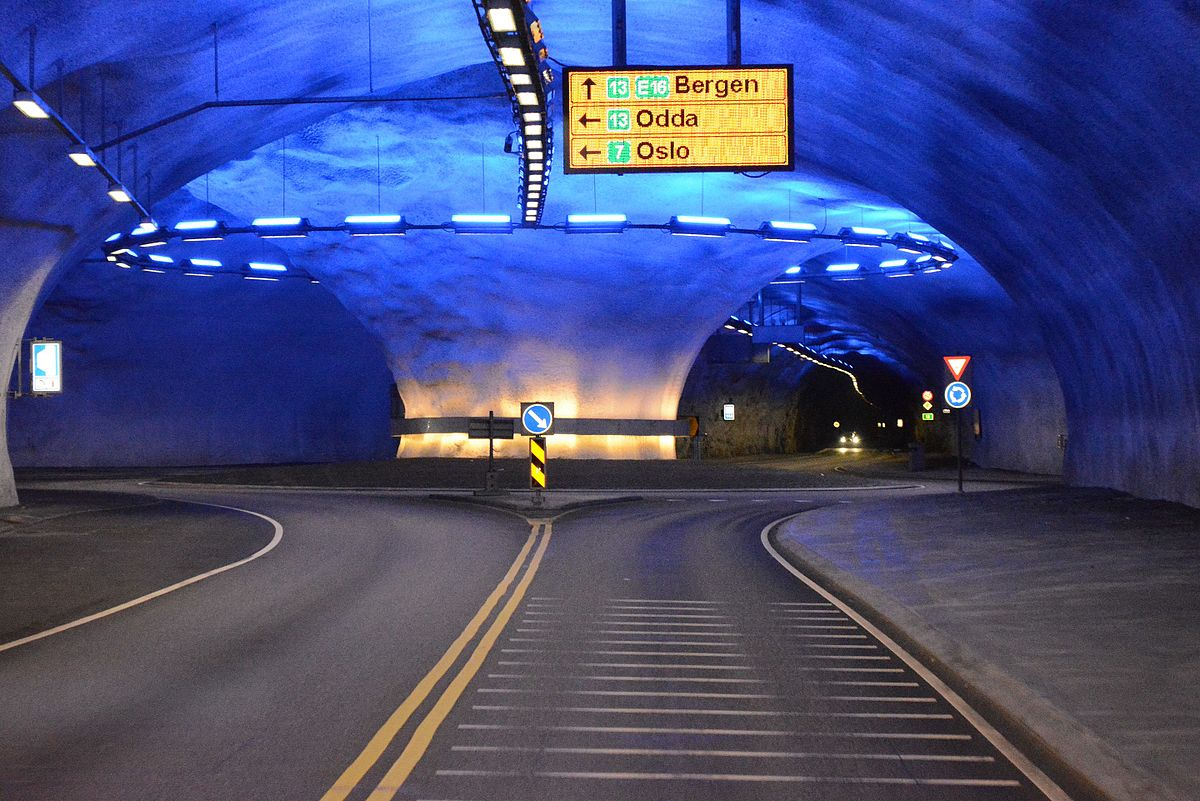
- International traffic experience: Chainzone has supported intelligent traffic display projects across highways, expressways, tunnels, and major transport infrastructure, including applications in Poland, Malaysia, the Netherlands, Norway, and Hong Kong, China.
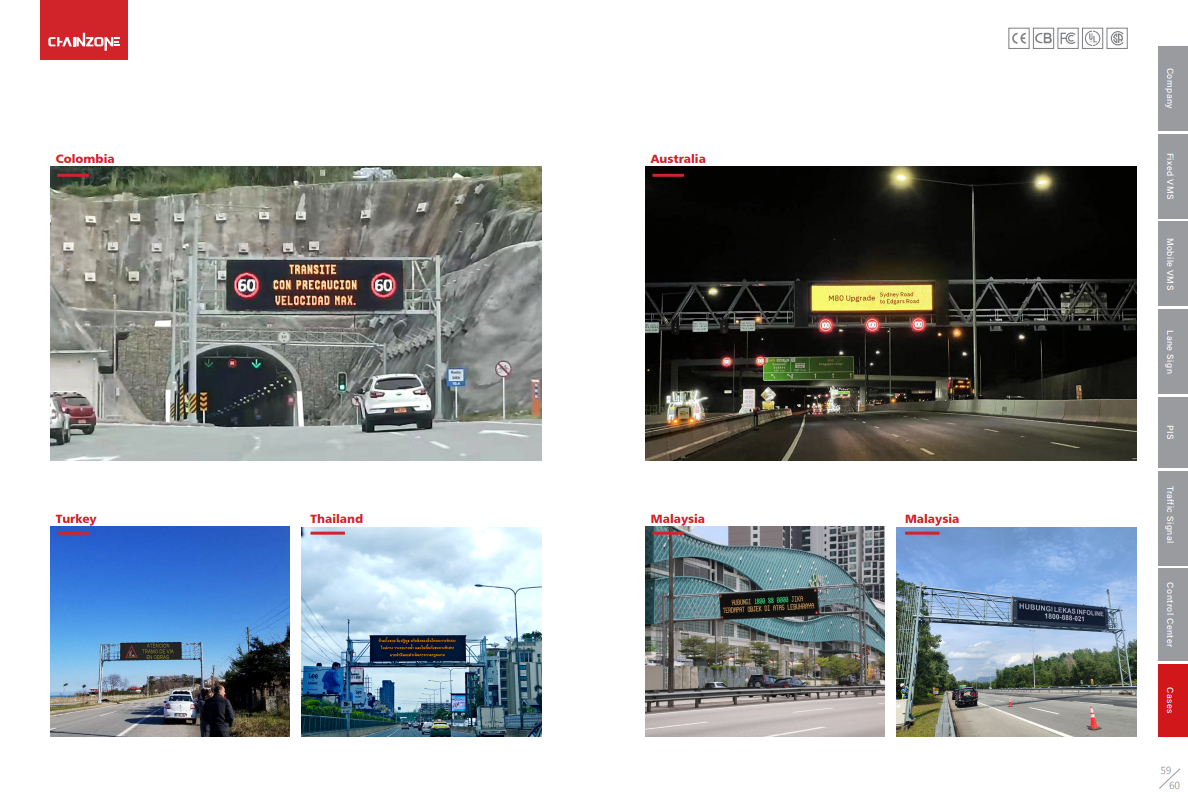
Picture shown: Chainzone’s global VMS projects. View the complete traffic product portfolio and project references in the Intelligent Traffic Product Brochure.
For traffic engineers and system integrators, the practical value lies in working with a variable message sign manufacturer that can discuss not only LED display specifications, but also traffic protocols, controller compatibility, environmental conditions, installation needs, maintenance access, and long-term operational requirements.
Choose VMS as a Traffic System Component
Variable message signs (VMS) are essential tools for communicating changing road conditions and guiding road users through complex traffic environments. Their effectiveness depends on clear message design, suitable placement, reliable hardware, compatible control systems, and a configuration that fits the actual operating environment.
Chainzone supports organizations seeking large-format digital traffic-display solutions with VMS product selection, control-system integration, protocol compatibility, and project-specific configuration. Contact Chainzone to discuss your VMS project requirements, local traffic standards, environmental conditions, and system-integration needs!


