
A stadium LED display has become a central part of the modern sports-venue experience. From live game footage and real-time scoring to sponsor advertising and emergency announcements, a well-designed LED system helps stadium operators turn a venue into a more engaging, informative, and commercially effective environment.
For stadium operators, contractors, system integrators, educational institutions, and public-sector venue managers, selecting the right stadium LED screen requires more than choosing a large display. The right solution must match the venue layout, viewing distances, sport type, environmental conditions, content needs, and long-term operating goals.
This guide explains the main benefits, display types, sport-specific applications, and key selection factors for sports venue LED projects.
Benefits of LED Screens in Sports Events
LED displays give sports venues a flexible visual communication platform that can serve spectators, event organizers, broadcasters, advertisers, and venue staff at the same time.
1. Enhanced Viewer Experience
A large stadium LED screen gives fans a clearer view of the action, especially when they are seated far from the field, court, or track. Live video feeds, instant replays, player close-ups, animated introductions, and crowd-engagement content can make the event more immersive.
For major venues, the display system should also support smooth fast-motion playback. This is important for football, basketball, motorsports, and other high-speed events where motion blur, flicker, or poor image quality can reduce viewing comfort.
High refresh rates are particularly valuable for camera-facing displays. For example, Chainzone’s outdoor-focused V-Plus Series offers a 7,680 Hz refresh rate, which can help support stable visual performance in environments where screens may be captured by broadcast or event cameras.
2. Real-Time Information Display
Sports venues depend on clear, timely information. LED displays can show:
- Live scores, game clocks, and match periods
- Team lineups, player profiles, substitutions, and statistics
- Penalties, fouls, timeouts, race positions, and lap information
- Wayfinding messages, gate information, and event schedules
- Safety notices, weather alerts, and emergency communications
- Fan polls, social media content, promotions, and interactive campaigns
This versatility allows a single display network to support both game-day operations and non-sporting events such as concerts, exhibitions, graduations, and public gatherings.
3. Improved Advertising Opportunities
Digital LED systems create valuable advertising inventory for stadium operators. A main screen can feature premium sponsor content, while an LED ribbon board or perimeter LED system can deliver repeated brand exposure throughout the event.
Perimeter displays are especially valuable in televised sports because they are often visible in broadcast camera angles. Stadium operators can update advertising content quickly, rotate sponsors by period or location, and tailor campaigns for different events without replacing printed signage.
4. Versatility And Adaptability
Unlike static signs, LED displays can change content instantly. A venue can use the same display system for sports scores in the afternoon, sponsor campaigns in the evening, and event schedules the next morning.
This flexibility makes LED technology suitable for venues that host multiple teams, tournaments, concerts, community programs, and commercial events. It also supports long-term revenue strategies by allowing operators to sell digital advertising packages, promote concessions, and communicate with audiences in real time.
Types of LED Screens for Sports Events
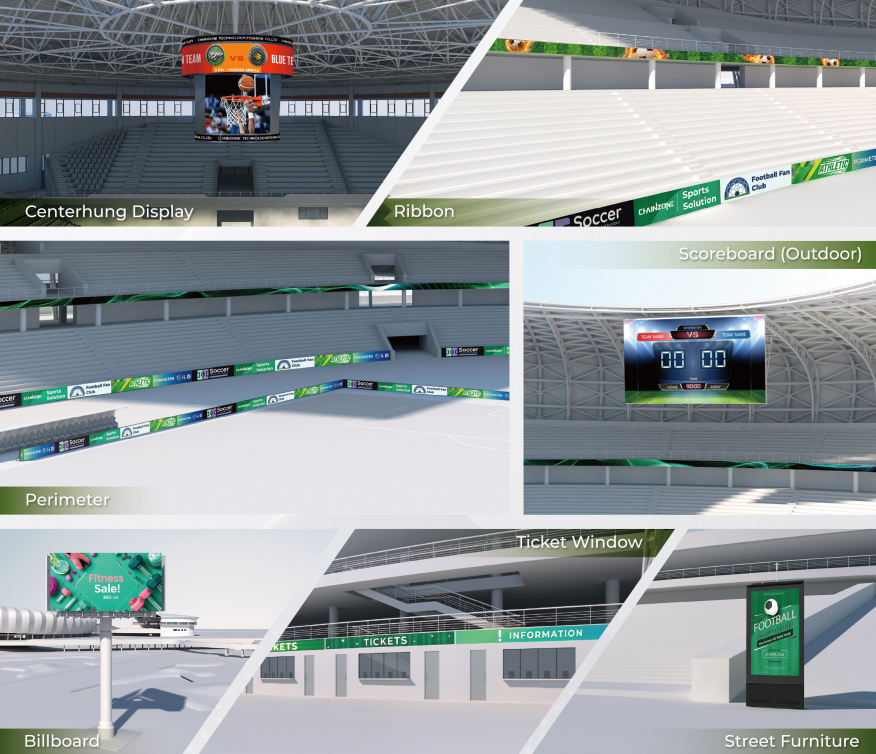
A complete sports venue LED solution may include several display formats. Each type serves a different purpose and should be selected according to the venue’s layout, content plan, audience distance, and operational requirements.
| Display type | Typical location | Primary role |
| Main video LED screen | End zones, field-side structures, or main spectator areas | Live video, replays, highlights, major announcements, premium advertising |
| LED ribbon board | Between seating tiers, along balconies, or around arena interiors | Scores, event messages, sponsor content, dynamic branding |
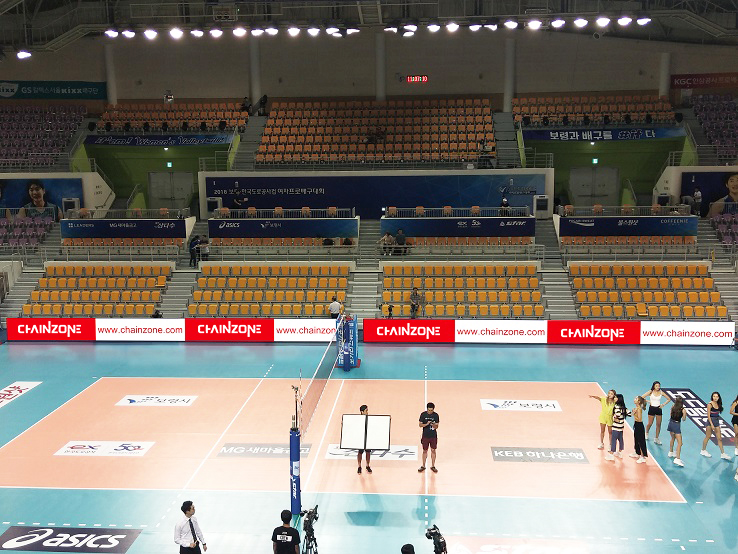
| Perimeter LED display | Around football pitches, basketball courts, or racing tracks | Advertising, sponsor rotation, event messaging |
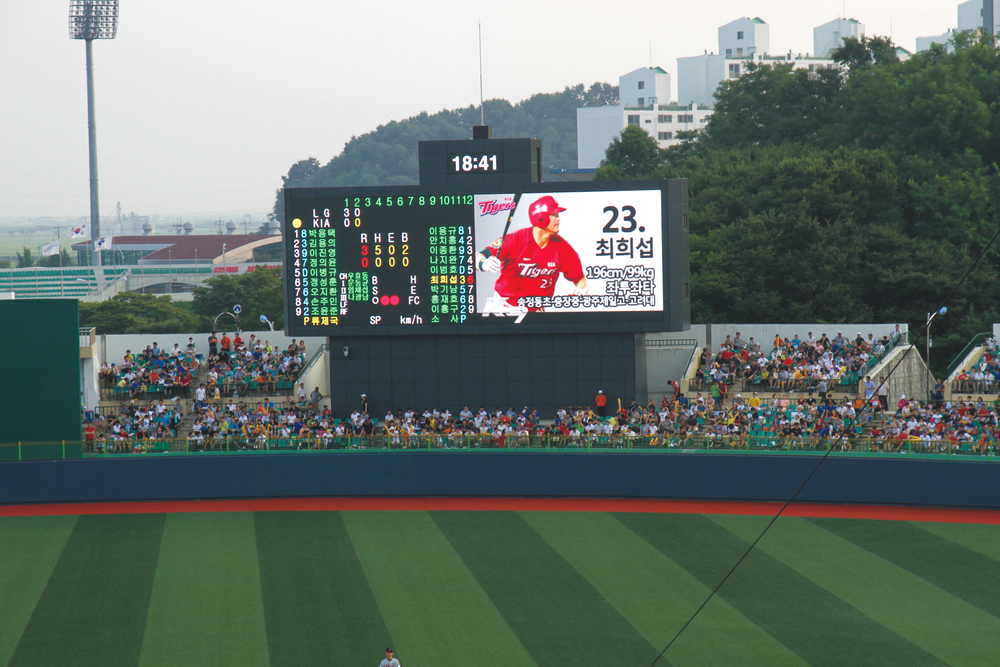
| Scoreboard LED display | Main scoreboard area or dedicated score location | Scores, clocks, team information, player statistics |
| Center-hung LED display | Suspended above indoor courts or arenas | Multi-sided live video, scoring, replays, advertising |
| Entryway and concourse display | Entrances, ticketing areas, corridors, retail and food zones | Wayfinding, schedules, promotions, venue communication |
1. Main Video LED Screen
The main video LED screen is often the visual centerpiece of an outdoor stadium. It typically delivers live match coverage, slow-motion replays, player introductions, entertainment content, and large-format sponsor messaging.
For outdoor applications, brightness, weather protection, viewing angle, and durability are critical. Screens located in direct sunlight may require much higher brightness than indoor systems to remain readable during daytime events.
2. LED Ribbon Board
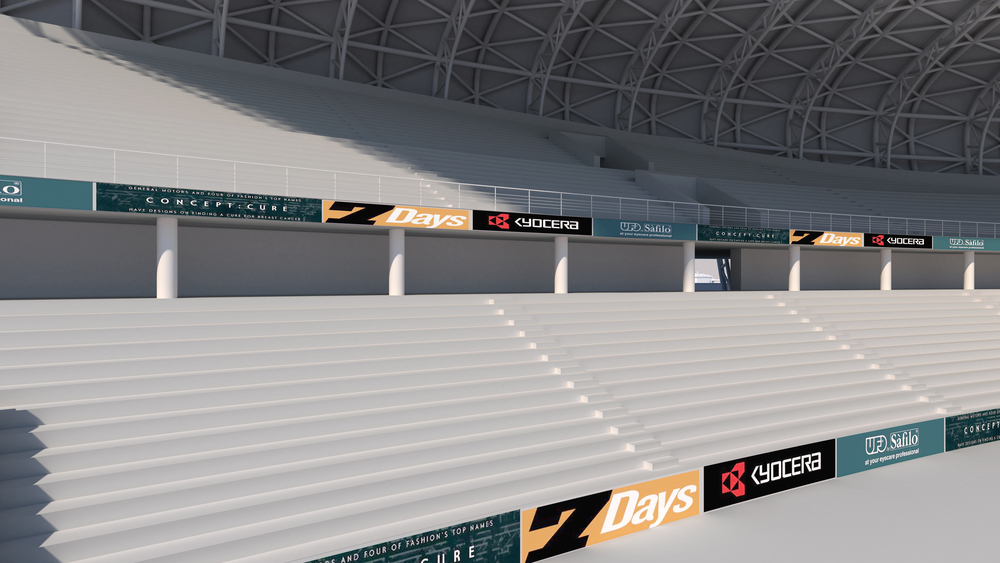
An LED ribbon board is a long, narrow display installed around seating bowls, arena fascias, balconies, or concourse edges. It provides continuous visual communication without blocking key sightlines.
Ribbon boards are useful for displaying scores, game statistics, team branding, sponsor messages, and crowd prompts. Because their dimensions differ from conventional video walls, content should be designed specifically for long horizontal layouts, readable fonts, and quick message recognition.
3. Perimeter LED Display
Perimeter LED displays are installed around the playing area, usually along football pitches, basketball courts, or trackside barriers. Their main purpose is dynamic advertising, but they can also support match-day messaging and visual effects.
These screens should be engineered for the physical conditions of their location. In addition to brightness and image quality, buyers should assess impact resistance, stable mounting, service access, and compatibility with broadcast environments.
4. Scoreboard LED Display
Modern LED scoreboards often combine traditional scorekeeping functions with video and advertising capabilities. Depending on the venue, the scoreboard may show the score, match clock, possession, player details, penalties, and tournament branding.
A reliable scoreboard system should integrate with the venue’s timing and scoring equipment. Information must be accurate, legible, and easy for operators to control during fast-moving events.
5. Center-Hung LED Display
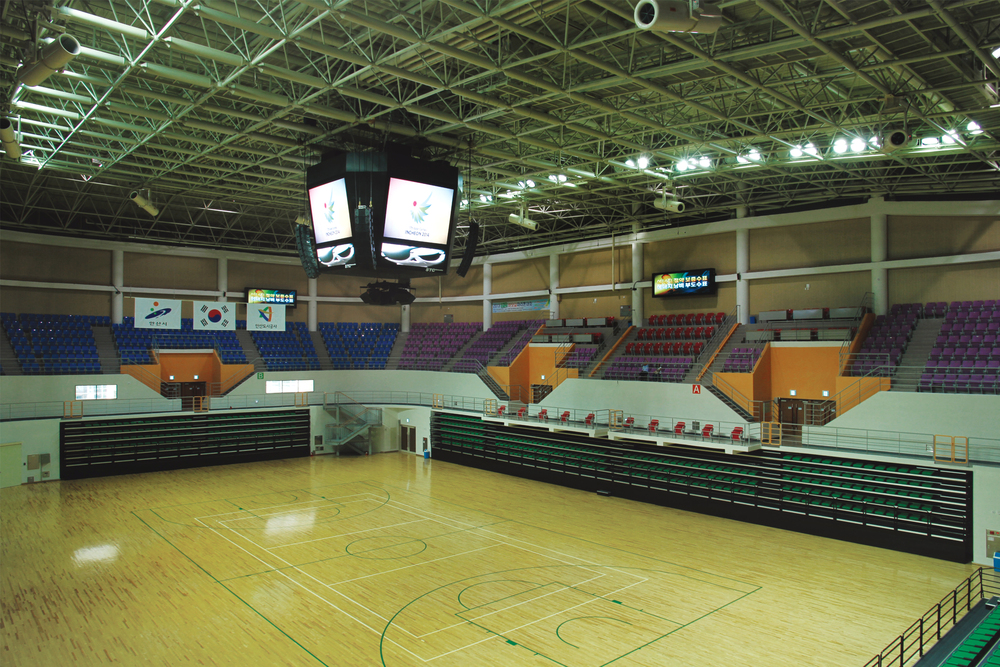
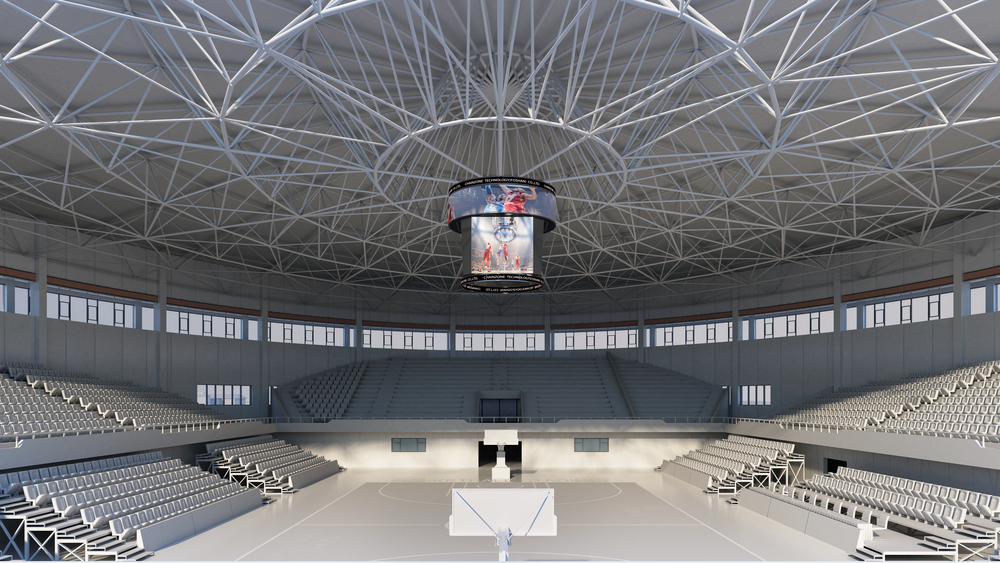
Center-hung displays are common in indoor basketball arenas, ice rinks, and multi-purpose venues. Suspended above the court, they may include four or more LED faces so spectators in every seating direction can view game information and video content.
These systems require careful structural planning. Contractors and integrators need to verify roof loading capacity, suspension design, power and signal routing, safety systems, and maintenance access before installation.
6. Entryway and Concourse Display
LED displays at entrances and concourses improve the visitor journey before, during, and after an event. They can display gate directions, ticket information, concession promotions, schedules, sponsor content, and emergency notices.
Because viewers are usually closer to these screens, fine-pitch indoor LED displays may be more appropriate than the larger-pitch products used for distant outdoor viewing.
LED Screen Applications by Sport
Different sports require different stadium LED display configurations. The best solution depends on the size of the venue, audience distribution, event pace, content priorities, and weather exposure.
1. Football and Soccer Stadiums
In professional football, pitch-side visibility is heavily regulated. Perimeter displays must meet strict optical and safety compliance, such as those set by UEFA. These screens often incorporate emergency escape gates—allowing sections of the screen to swing open in seconds to serve as a secure exit path for players and staff.
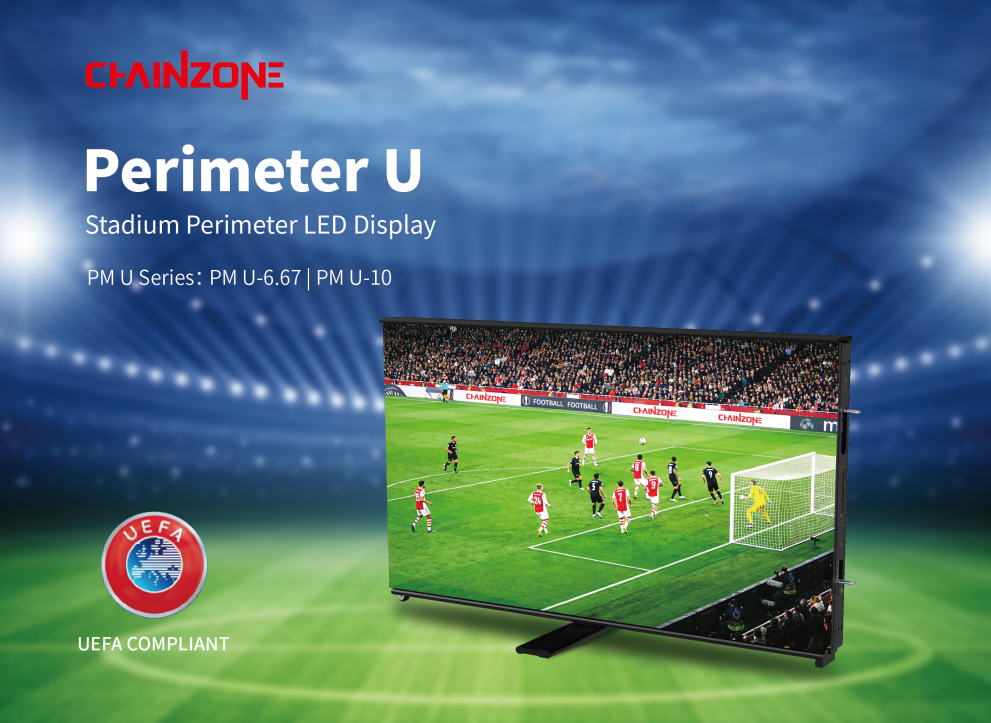
Picture shown: Chainzone stadium perimeter LED display
2. Basketball Arenas
Basketball is a fast-paced, indoor game that relies heavily on overhead visibility. Center-hung displays are commonly used, complemented by high-refresh-rate shot clocks and ribbon boards. The screens must deliver flawless, blur-free performance to capture lightning-fast transitions and high-flying dunks without visual tearing.
3. Tennis Courts
Tennis requires intense focus, and the lighting and displays must not distract the players. Screens used in tennis courts require exceptionally high contrast ratios and anti-glare masks. This ensures that the high-speed movement of the yellow ball remains easily trackable against the digital background, both for the live audience and broadcast cameras.
4. Racing Events
Motorsports tracks span massive outdoor areas, meaning spectators are often seated far from the action. Racing LED screens must be ultra-large and incredibly bright to combat direct sunlight. Furthermore, because these tracks are exposed to harsh environments, the displays require heavy-duty wind resistance and superior weatherproofing.
How to Choose a Stadium LED Display
Choosing the right stadium LED display means balancing viewing quality, project cost, installation conditions, reliability, and long-term operational needs.
1. Pixel Pitch and Viewing Distance
The pixel pitch (the distance between individual LED clusters) dictates the screen’s resolution. Indoor arenas with closer seating typically require a tighter pixel pitch (e.g., P2.5 to P4). In contrast, massive outdoor stadiums where the audience is further away can utilize a larger pixel pitch (e.g., P6 to P10) without sacrificing perceived image clarity.
2. Screen Size and Installation Location
The physical architecture of your venue dictates screen size and mounting style. For instance, you must account for structural load-bearing limits when installing ceiling-hung displays, and consider sightlines to ensure the screen is not obstructed by structural pillars or lighting rigs.
Before choosing a product, project teams should evaluate:
- Distance from the closest and farthest spectators
- Available mounting structure and load capacity
- Potential obstructions from seating, lighting, roofs, or camera platforms
- Direct sunlight and environmental exposure
- Access for installation, inspection, and maintenance
- Safety clearances for players, staff, spectators, and emergency routes
3. Brightness and Contrast
Outdoor displays demand high brightness—often exceeding 7,500 nits—to remain visible under direct midday sunlight. Indoor screens, however, prioritize high contrast and lower brightness (usually between 1,000 and 2,500 nits) to prevent audience eye strain and eliminate glare under arena spotlights.
Contrast, grayscale, and color consistency also matter. A screen may be bright enough but still deliver poor viewing quality if dark areas look washed out or colors appear inconsistent. For venues with broadcast requirements, camera testing should be part of the technical evaluation.
4. Weather Resistance and Durability
Outdoor stadium LED displays should be designed for long-term exposure to rain, humidity, dust, heat, wind, and changing temperatures. Ask suppliers about the IP rating, enclosure materials, thermal design, corrosion resistance, electrical protection, and maintenance method.
For sports applications, physical durability is equally important. Perimeter screens may need protective design features to withstand accidental impact, while elevated or center-hung screens require secure structural engineering and redundant safety measures.
5. Energy Efficiency
Large-format displays consume significant power. Opting for energy-efficient hardware, such as common-cathode LED technology and Chainzone’s LOB technology, reduces power consumption and minimizes heat generation. This not only lowers long-term operational costs but also extends the lifespan of the display components.
Chainzone Stadium LED Display Solutions
Chainzone provides integrated LED display solutions for different areas of a sports venue, including playing-field perimeters, seating tiers, scoreboards, center-hung structures, entrances, and outdoor public areas. Instead of relying on one screen type for every purpose, venue planners can combine several Chainzone stadium LED display products according to viewing distance, installation conditions, content requirements, and the sport being hosted.
| Chainzone solution | Available series or specifications | Suitable applications | Key features |
| Perimeter U Stadium Perimeter LED Display | PM U-6.67 and PM U-10 | Football pitches, soccer fields, courts, and other field-side advertising areas | UEFA compliant, 7,500-nit brightness, 7,680 Hz refresh rate, 16-bit grayscale, IP65 protection, 160°/110° viewing angle, and dual power and signal backups |
| LED Ribbon Display | P6.94, P8.33, and P10.4 options | Seating tiers, arena fascias, balconies, and stadium interiors | 8,000-nit brightness, 7,680 Hz refresh rate, 16-bit grayscale, wide viewing angle, signal backup, top maintenance, and an ultra-slim design |
| Scoreboard Solution | Optional EXL, E4 Pro, E4H, and V-Plus series; P6, P8, P10, and P16 options | Outdoor scoreboards, main viewing screens, and sport-specific information displays | Integrated scoring software, control hardware, and LED displays; compatibility with timing systems, match-management platforms, and third-party controls |
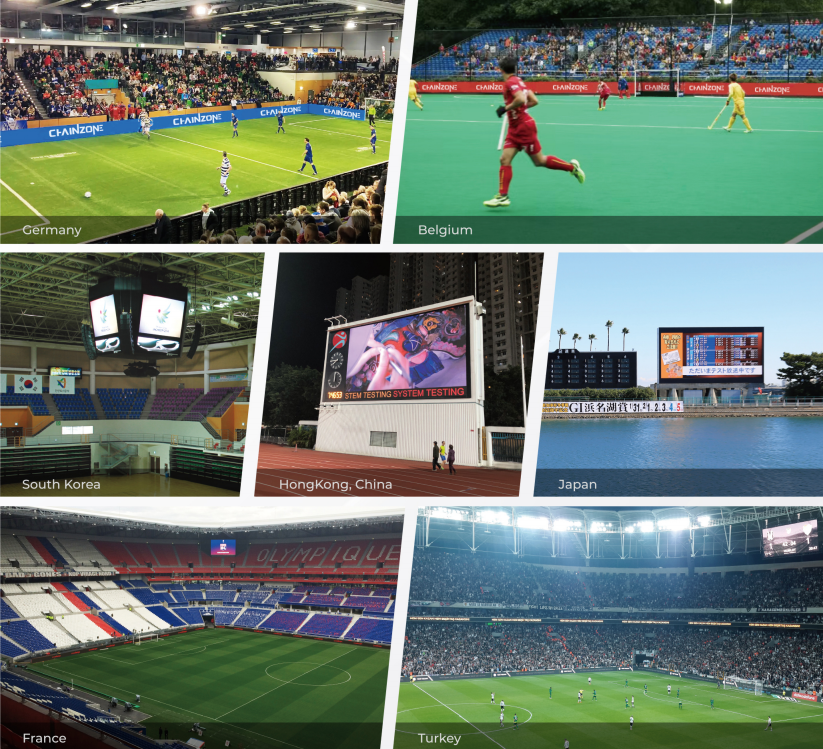
Picture shown: Chainzone global stadium LED display projects
Conclusion
Selecting the right stadium LED display is essential for delivering clear information, engaging spectators, supporting broadcast requirements, and creating valuable advertising opportunities. The display type, pixel pitch, brightness, durability, and control system should all be matched to the venue and its events.
With extensive experience in providing customized LED display solutions for sports venues, Chainzone can support projects ranging from perimeter displays and ribbon boards to scoreboards and center-hung systems. Venue owners, contractors, and system integrators can contact Chainzone to explore a reliable stadium LED display solution for their specific project!


