
In the world of modern infrastructure, traffic road signs have evolved from static metal sheets into sophisticated communication hubs. As highways become smarter and traffic volumes increase, the demand for dynamic, real-time information has led to the widespread adoption of the electronic road sign, technically known as a Variable Message Sign (VMS). However, for these signs to be effective, they must adhere to rigorous international standards—most notably, EN12966.
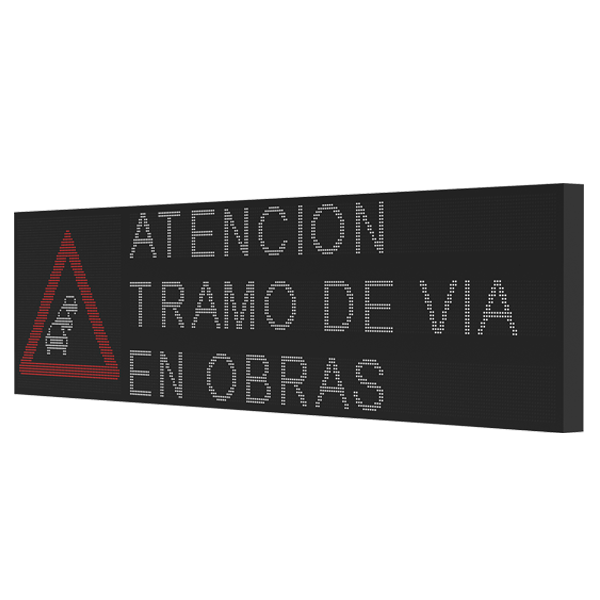
The Core of EN12966: Precision and Safety
The EN12966 standard is a European benchmark that dictates the functional and optical requirements for VMS. It ensures that an electronic road sign remains legible and reliable under the most grueling conditions. The standard focuses on four critical pillars:
- Optical Performance: This includes luminance (brightness), contrast ratio, and beam width. A compliant sign must be visible in direct, blinding sunlight (L3 class) and maintain a high contrast ratio (R3 class) so that drivers can distinguish characters instantly without eye strain.
- Color Stability: To prevent confusion, the colors used for warnings (red, amber, green) must stay within specific chromaticity coordinates (C2 class), ensuring a “stop” signal never looks orange or washed out.
- Environmental Integrity: Signs are tested for resistance against extreme temperatures (T1 to T3 ranges), humidity, and wind loads. They must also be protected against pollution and water ingress (IP ratings).
- Electromagnetic Compatibility (EMC): This ensures the sign does not interfere with other critical road technology, such as emergency radio frequencies or vehicle sensors.
Strategic Applications and Advantages
By meeting these standards, an electronic road sign serves as a vital tool for congestion management, speed control, and emergency alerts. High-performance VMS are deployed in tunnels, where visibility transitions are sharp, and on bridges where wind and vibration are constant threats. The primary advantage of EN12966-compliant technology is the significant reduction in driver “recognition time”—the faster a driver reads a message, the safer the road remains.
Chainzone: Leading the Standard in Traffic Solutions
At Chainzone, we have spent years perfecting our VMS technology to meet these international benchmarks. As one of the first manufacturers to receive EN12966 certification, we prioritize innovation that serves both the operator and the end-user.
Our products feature a patented ball-shaped optical lens design. This unique technology precisely projects the LED beam toward the road surface, which dramatically reduces light reflection and eliminates glare for drivers at night. This “Anti-Glare” feature is a cornerstone of our commitment to safety. Furthermore, our smart optical lens maximizes light efficiency, allowing Chainzone signs to deliver superior brightness with lower power consumption.
We have designed our systems with a modular structure for easy maintenance and integrated sensors for real-time diagnostics. Whether utilized in smart city guidance or high-speed highway management, our solutions ensure that traffic road signs remain clear, durable, and energy-efficient for years to come.


