
As we continue to develop smarter outdoor advertising, the role of the digital billboard has expanded beyond visibility into efficiency and sustainability. In today’s market, every DOOH billboard must balance brightness, performance, and energy consumption. We see this shift clearly as advertisers demand solutions that reduce operational costs while maintaining consistent display quality.
At Chainzone, we focus on integrating energy-saving technologies directly into the design of our DOOH billboard systems. By optimizing both hardware and control systems, we help create displays that perform reliably while consuming less power over time.
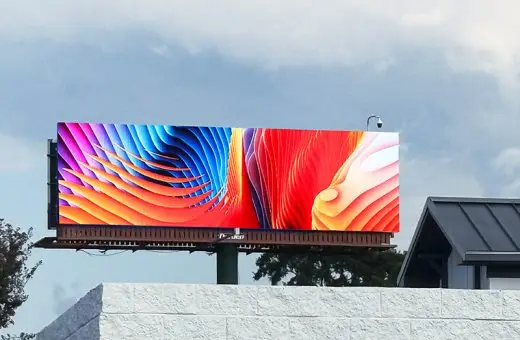
Advanced LED Technology for Lower Power Consumption
One of the most important factors in energy efficiency is the LED technology used in a digital billboard. Modern systems now rely on advanced optical solutions such as lens-on-board technology. This approach improves light utilization, meaning less energy is required to achieve the same brightness level.
Our solutions apply this technology to reduce energy consumption significantly while maintaining high contrast and clarity. In fact, optimized LED structures can cut power usage by up to 80 percent compared to conventional systems.
At the same time, improved brightness control ensures that the DOOH billboard adapts to ambient light conditions, avoiding unnecessary energy use during low-light periods.
Intelligent Power Management Systems
Energy efficiency is not only about LEDs but also about how power is delivered and managed. A modern digital billboard integrates intelligent power systems that distribute electricity more effectively across the display.
We design our DOOH billboard solutions with separated power modules and balanced load systems. This structure improves stability while reducing energy waste and heat generation. Lower heat output means less strain on internal components, which helps extend the lifespan of the display and reduces maintenance needs.
In addition, smart diagnostics allow operators to monitor energy usage in real time and make adjustments when necessary.
Thermal Control and Long Lifespan Design
Heat management plays a critical role in energy-saving performance. Excess heat not only wastes energy but also shortens the lifespan of a digital billboard.
We address this by combining low-current driving technology with efficient cooling systems. These features reduce internal temperatures while maintaining consistent brightness. As a result, the DOOH billboard operates more efficiently over long periods, even in demanding outdoor environments.
This approach also supports stable operation in various climates, ensuring that energy efficiency does not come at the cost of reliability.
Smart Brightness and Environmental Adaptation
Another key innovation is adaptive brightness control. A DOOH billboard does not need maximum brightness at all times. By using sensors and automated adjustment systems, we ensure that the display output matches the surrounding environment.
This not only reduces energy consumption but also minimizes light impact on nearby communities. Adjustable light angles and controlled luminance levels make digital billboards more suitable for urban and residential areas.
Through these smart adjustments, energy savings are achieved without compromising visibility or audience engagement.
Conclusion
Energy-saving technologies are now central to the evolution of the digital billboard and DOOH billboard industry. From advanced LED structures to intelligent power management and adaptive brightness control, each innovation contributes to lower energy use and longer system life.
At Chainzone, we continue to refine these technologies to support efficient and reliable outdoor advertising. By focusing on sustainable design and practical performance, we help businesses achieve effective communication while managing long-term operational costs.


