
Urban skylines have long struggled with the physical intrusion of oversized electronic billboards. Heavy steel sub-frames and protruding enclosures often disrupt clean architectural lines, turning elegant building facades into mere scaffolding for commercial advertising.
Achieving a seamless dialogue between dynamic messaging and municipal design requires reimagining display hardware from the chassis outward. Modern digital signage must complement urban masonry, glass curtains, and public thoroughfares rather than dominating them through sheer visual bulk.
Architectural integrity relies on balance, proportion, and deliberate material selection. Installing large electronic surfaces onto high-visibility structures demands engineered solutions that respect existing facade geometry while delivering dependable, uncompromised visual communication.
Structural Friction Between Heavy Enclosures and Modern Facades
Standard display cabinets traditionally introduce substantial dead loads that complicate civil engineering sign-offs. Mounting hundreds of kilograms onto older masonry or delicate curtain walls frequently demands intrusive structural reinforcements that inflate installation budgets and deface original exterior finishes.
Wind shear creates another persistent operational threat for exterior installations. Deep enclosures project outward, acting as unintended sails that amplify aerodynamic torque during coastal storms or severe downtown wind tunnels, risking mechanical fatigue across mounting brackets.
Retrofitting historical stone structures presents severe preservation hurdles. Drilling deep anchor bolts into aged masonry triggers micro-fractures, prompting municipal heritage boards to prohibit heavy secondary steel trusses that permanently alter historic building fabric.
Civic planners consistently reject hardware that obstructs pedestrian sightlines or clashes with protected historic districts. Deploying a bulky LED screen on a municipal landmark risks fierce public pushback, aesthetic degradation, and stringent zoning violations that delay project execution.
Thermal exhaust pockets form behind deep cabinets trapped against flat exterior walls. Trapped heat accelerates component aging, degrades solder joints, and causes premature pixel chromatic shift, creating noticeable discoloration patches across expansive architectural displays.
Overcoming these installation challenges requires display cabinets that balance structural strength with a compact design. Chainzone’s E4H Series features a thickness of less than 99 mm and a weight of approximately 25 kg/m², helping reduce installation space requirements and structural loads in outdoor projects.
Mechanical Innovations Enabling Slim-Chassis Engineering
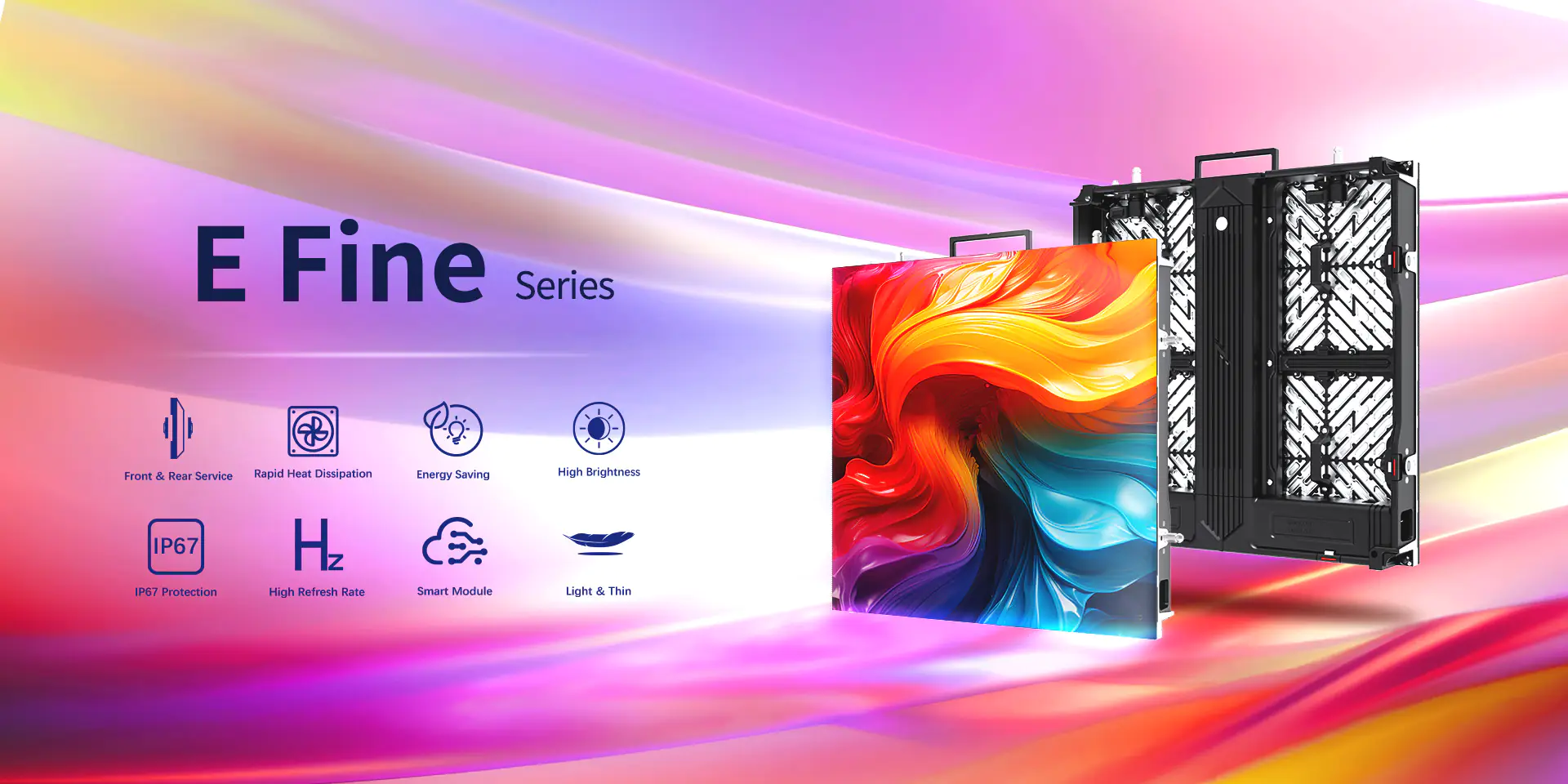
At Chainzone, we design outdoor LED displays with compact structures and practical installation features. Our E Fine Series adopts a die-cast aluminum cabinet with a concealed wiring design, creating a clean appearance while supporting durability and efficient heat dissipation.
Its front-and-rear maintenance design also helps simplify servicing and installation management, making it a practical solution for outdoor digital signage and digital out-of-home (DOOH) applications where durability and long-term maintainability are essential.
Concealed wiring is another useful design feature for outdoor LED displays. By keeping cables less visible, Chainzone’s E Fine Series maintains a cleaner cabinet appearance and supports more integrated installation within urban environments.
Concealed wiring is another useful design feature for outdoor LED displays. By keeping cables less visible, Chainzone’s E Fine Series maintains a cleaner cabinet appearance and supports more integrated installation within urban environments.
Modular cabinet designs allow outdoor LED displays to be assembled for different project requirements. Combined with flexible mounting options, these structures help integrate displays into building walls and other urban installation environments.
Compact and lightweight display structures can simplify transportation and on-site installation. For example, Chainzone’s E4H Series weighs approximately 25 kg/m² and has a cabinet thickness of less than 99 mm, making it suitable for projects where installation space and structural load need careful consideration.
Preserving Architectural Aesthetics Through Adaptive Integration
Commercial plazas, transit hubs, and retail flagships present vastly different spatial geometries. Flexible installation options allow outdoor LED displays to adapt to different architectural structures. Chainzone’s E Fine Series supports wall-mounted, hanging, pole-mounted, and seat-mounted configurations, providing flexibility for street furniture and other urban display applications.
Maintenance logistics must adapt to high-density pedestrian corridors where closing sidewalks for crane access is impossible. Front and rear maintenance options allow technicians to access display components from different directions, providing greater flexibility when servicing outdoor LED installations.
Glass facade applications benefit enormously from lightweight, low-profile engineering. Street furniture, building facades, and commercial outdoor spaces can all benefit from compact LED displays that integrate more naturally into their surroundings. Products such as Chainzone’s E Fine Series are designed for street furniture and outdoor DOOH applications.
Custom perimeter framing enables architects to match surrounding panel finishes effortlessly. Chainzone‘s concealed wiring design and compact cabinet structure help create a cleaner installation appearance, making the E Fine Series suitable for urban environments where visual integration is important.
Acoustic dampening represents an overlooked benefit of solid-state slim engineering. Beyond visual integration, effective thermal management also supports reliable outdoor display operation. Chainzone’s E Fine Series features a dedicated heat dissipation design within its integrated power and control box
Long-Term Reliability in Demanding Urban Environments
Outdoor LED displays must withstand dust, moisture, temperature fluctuations, and other environmental stressors. Chainzone’s E Fine Series features an IP65-rated protective design and is specified for moisture resistance, low- and high-temperature resistance, salt-spray resistance, and severe weather conditions.
For outdoor installations in street furniture and digital out-of-home (DOOH) applications, these protection features help safeguard display components and support reliable operation.
We at Chainzone also offer LOB (Lens on Board) technology, which encapsulates individual LEDs in a protective layer to help shield them from moisture, UV exposure, dust, and physical impact.
Automatic brightness adjustment is important for outdoor displays operating under changing lighting conditions. Chainzone’s traffic display solutions incorporate light sensors to adjust brightness according to ambient conditions, helping maintain visibility while reducing unnecessary light output.
Transit centers and municipal intersections demand round-the-clock operational uptime under harsh vibration loads. Dynamic digital signage deployed across bus rapid transit shelters or passenger terminals guides commuter journeys clearly while maintaining a minimal physical footprint within crowded corridors.
Compact cabinet structures and flexible maintenance access can help simplify installation and long-term servicing. These design considerations may also help project owners manage installation complexity and maintenance costs more effectively.
Energy efficiency is another important consideration for outdoor LED displays. Chainzone’s LOB technology improves light utilization and helps reduce power consumption, while the E Fine Series also adopts an energy-efficient design to support lower operating costs.
Unifying Form, Function, and Civic Identity
City architecture communicates civic values, historical reverence, and forward-looking economic vitality. Installing a sleek LED screen should elevate that dialogue, providing public information, cultural programming, and commercial dynamism without compromising the architectural integrity of our built heritage.
Through slim-profile hardware, precision chassis manufacturing, and facade-conscious engineering, we bridge the divide between visual media and physical architecture. Modern structures no longer have to choose between dynamic communication and timeless urban elegance.


