
Roadway authorities and intelligent transportation engineers rely on variable message signs to convey life-critical warnings across expressways, bridges, and mountain tunnels. Traffic displays installed along high-speed corridors are designed to maintain good legibility under challenging environmental conditions, including direct sunlight, fog, and severe weather. Achieving reliable performance in applicable European highway projects requires verifying compliance with EN 12966 and the relevant regulatory requirements for the intended road signage application.
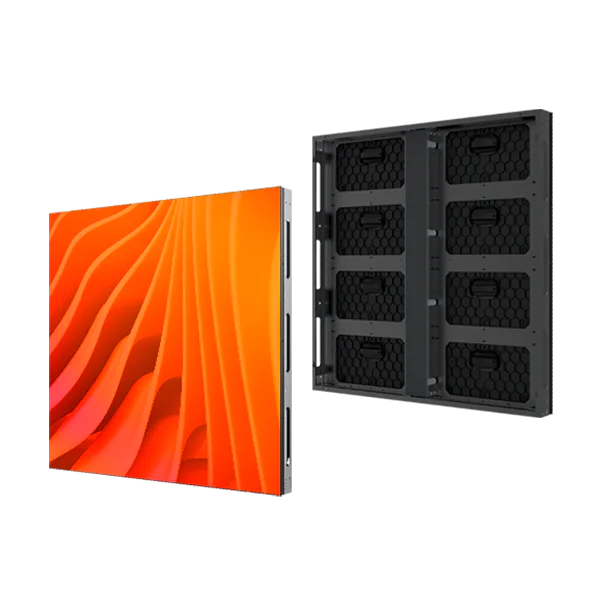
Navigating these demanding technical criteria separates standard screen fabricators from an experienced LED display manufacturer. Meeting every compliance tier is an exhaustive engineering discipline that connects precision component selection, specialized optical modeling, comprehensive laboratory testing, and certified factory production control.
Optical Engineering and Precision Beam Collimation
Optical performance represents the primary pillar of EN 12966, establishing strict thresholds across luminance, contrast, color coordinates, and angular distribution. Highway operators cannot afford displays that wash out under noon sun or cause blinding glare at night. Fulfilling the highest luminance rating, Class L3, demands meeting colour-specific luminance thresholds: white ≥ 12,400 cd/m², yellow ≥ 7,440 cd/m², green ≥ 3,720 cd/m², and red ≥ 3,100 cd/m², measured under 40,000 lux ambient illumination.
Engineered optical lenses solve this challenge at the diode level. Rather than simply overdriving diodes with high electric current, which accelerates thermal degradation, our specialized spherical lens arrays collimate the emitted beam directly toward approaching vehicle sightlines. Controlling peripheral light dispersion can improve optical efficiency and may help reduce power consumption, depending on the optical design and operating conditions. Selecting an advanced LED display supplier ensures that signs maintain Class R3 luminance contrast ratios without excessive electrical stress.
Achieving color uniformity class C2 requires rigorous binning procedures before surface mounting. Our technicians sort individual diodes by dominant wavelength tolerances within two nanometers and forward voltage variations within tight millivolt windows. Uniform chromaticity prevents patchwork color shifts across large display matrices, guaranteeing that warning red borders and amber advisory text render identically across adjacent panels.
Photometric Laboratory Verification
Standard compliance cannot rest on theoretical simulations alone. At Chainzone, we subject every dynamic optical assembly to comprehensive evaluation inside our dedicated photometric laboratory. Automated darkroom goniophotometers sweep 360-degree coordinates around the sign face, mapping spatial light intensity distribution curves and isolating exact cutoff angles.
Photometric testing verifies that the sign meets its specified beam-width class. Chainzone’s published specifications list B1–B6 at ±15° horizontally and −10° vertically downward, and B7 at ±30° horizontally and −20° vertically downward. These angles define the spatial light distribution around the sign face; they are not direct classifications of road corridor width or intersection geometry. Colorimetric sensors simultaneously evaluate chromaticity coordinates for red, green, amber, and white diodes to ensure Class C2 compliance. Integrating closed-loop light sensors enables smooth 100-level automatic dimming, preventing driver disorientation during sudden transitions between daylight and nightfall.
Environmental Resilience and Mechanical Stress Testing
Expressway environments subject roadside electronics to constant physical abuse. Road spray containing deicing salts, diesel exhaust, continuous structural vibration, and seasonal thermal swings threaten premature module failure. Certified dynamic signs must meet the applicable mechanical and environmental requirements for their intended installation. Dust and water ingress protection should be verified separately from pollution-class performance, and wind-loading requirements should follow the relevant project specifications.
Climate chambers simulate decades of extreme operating stress by cycling internal components between temperature classes T1, T2, and T3, spanning minus 40 to plus 60 degrees Celsius. Salt-spray corrosion tanks, rain booths, and high-frequency vibration tables expose hardware weaknesses before field deployment. Testing under Class D3 pollution conditions confirms that front optical surfaces resist chemical etching and preserve self-cleaning capabilities throughout extended service lifecycles.
Electrical Safety and Electromagnetic Compatibility
Deploying roadside infrastructure alongside inductive traffic loops, roadside radars, and fiber-optic telemetry demands robust electromagnetic isolation. EN 50293, the electromagnetic compatibility standard integrated into EN 12966, dictates that signs must operate without radiating disruptive radio frequencies or succumbing to external electrical surges.
Anechoic chambers isolate our hardware to evaluate radiated and conducted emission thresholds across broad radio spectrums. Lightning surge simulators and insulation resistance benches verify that high-voltage power supplies safeguard internal logic circuits. A qualified LED display manufacturer should provide evidence that the field cabinet meets the specified electrical safety and electromagnetic immunity requirements. Communication continuity also depends on the system architecture, installation, and site conditions.
Factory Production Control and Certification Governance
Passing independent initial type testing conducted by accredited notified bodies provides initial validation, but sustained compliance requires continuous manufacturing discipline. Construction Products Regulation mandates that producers implement a certified Factory Production Control system subject to annual surveillance audits. Quality audits verify that component batches, automated soldering profiles, and protective potting compounds match the exact baseline submitted during formal certification.
Maintaining our comprehensive 1/4/4 quality management framework at Chainzone guarantees full component traceability from raw silicon bins to assembled roadside cabinets. In-line automated optical inspection verifies LED placement precision, while 72-hour thermal burn-in protocols screen out infant mortality defects across driver integrated circuits. Every production batch undergoes sample goniometer audits before dispatch to uphold certified optical performance.
Procurement agencies managing smart highways, toll gantries, and tunnel networks prioritize audited compliance over unverified marketing claims. Working with a dependable LED display supplier eliminates legal liabilities and costly field replacements by delivering authenticated Declaration of Performance documentation. Verified certification ensures that dynamic messaging equipment integrates smoothly with national NTCIP 1203, UTMC, and open XML control protocols.
Delivering Mission-Critical Highway Safety
Highway authorities leave zero margin for unreadable warning displays or sudden hardware blackouts. Proven deployments across Austria, Norway, and Hong Kong demonstrate that systematic adherence to EN 12966 translates directly into lower life-cycle operational costs and safer highway transit. Aligning with an established LED display manufacturer ensures that complex municipal tenders meet both technical criteria and long-term infrastructure mandates.
Securing a qualified LED display supplier that controls every facet of testing and fabrication safeguards public infrastructure investments. At Chainzone, our patented optical lens design supports high contrast and energy-efficient performance in traffic display applications. Product suitability and legibility should be verified against the required optical classes, installation conditions, and applicable test results.


