
Operating a large-format display requires orchestrating hardware signal processors, specialized transmission protocols, and intuitive software interfaces. Many operators assume that controlling an LED display simply means connecting an HDMI cable. In practice, outdoor digital signage and traffic displays require coordinated hardware control, content management, and remote monitoring to ensure reliable operation.
Mastering this control ecosystem guarantees seamless visual delivery, prevents signal latency, and protects expensive electronic components from unexpected hardware failures. Establishing reliable display control involves several distinct operational stages, beginning right at the physical transmission layer and extending to cloud-based management.
Mapping the Physical Signal Chain
Video sources generate native output from media players, production switchers, or industrial computers. Signals travel through digital interfaces into an external video processor, which scales and crops the incoming raster to match the display canvas resolution without distorting the native aspect ratio.
Sending units convert framed video feeds into packetized network data streams. At Chainzone, we combine outdoor LED display hardware with integrated management capabilities, helping operators manage display content and monitor equipment performance through a unified platform.
Data cables connect directly to internal receiving cards housed inside each modular cabinet. Each receiving card decodes incoming packets and distributes serialized electrical data across hub boards to scan drivers, illuminating individual pixels across the physical LED screen with sub-millisecond precision.
Selecting Between Synchronous and Asynchronous Control Topologies
Choosing your fundamental control topology depends entirely on content latency requirements and operational environments. Synchronous setups mirror a live source in real time, functioning essentially as a massive secondary monitor driven continuously by an active computer, broadcast switcher, or dedicated media server.
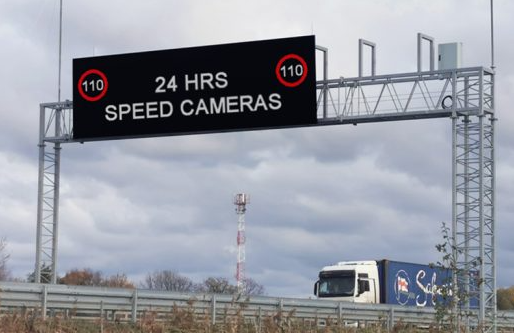
For outdoor traffic displays, timely information delivery is particularly important, as VMS solutions are used to communicate road conditions, lane closures, construction zones, and traffic guidance to drivers. Eliminating frame lag remains critical whenever operators switch camera feeds, present live graphics, or manage real-time instrumentation dashboards.
Asynchronous control uses a controller or media player with local storage to play scheduled content without requiring a continuously connected host computer. Autonomous commercial digital signage applications leverage this topology to run programmed loops, static promotional graphics, and scheduled animations without needing an active host PC.
Hybrid installations merge both methodologies into unified controller units. Dual-mode systems display high-priority live video during operating hours while automatically switching over to standalone asynchronous playlists during network outages or scheduled maintenance windows.
Configuring Cabinet Coordinates and Calibration Parameters
Physical installation must precede digital mapping inside your chosen configuration software. Technicians connect a laptop to the sending unit via USB or local network interfaces, launching manufacturer-specific setup utilities to detect connected receiving cards across every serial data line.
Coordinate mapping assigns each physical cabinet an absolute coordinate within the sending card’s overall canvas resolution. Constructing an accurate topological map prevents scrambled imagery and ensures video signals traverse seamlessly across every modular LED screen cabinet in proper order.
Proper display configuration helps maintain consistent image quality across interconnected LED modules. For outdoor commercial displays, Chainzone’s LOB (Lens On Board) technology further improves contrast and light utilization while reducing power consumption.
Color calibration coefficients stored on receiver EEPROM chips ensure uniform brightness across separate manufacturing batches. Adjusting chromaticity coordinates at this stage delivers balanced whites and prevents visible patchwork color variations between adjacent modules across wide viewing angles.
Deploying Centralized CMS and Cloud Network Management
Everyday operational management transitions to content management software once initial hardware calibration finishes. Modern CMS platforms let non-technical operators design layouts, divide screens into customizable content zones, and schedule targeted playlists days or weeks in advance.
Chainzone’s Integrated Management Platform (IMP) supports centralized management of multiple outdoor displays, including content publishing, hardware monitoring, and remote maintenance through its supported management interfaces.
Secure network communication protocols prevent unauthorized content injection and verify data integrity before file execution. Modern network protocols confirm that media packages download completely and authenticate cryptographically before passing them directly to local LED screen storage caches.
Through Chainzone’s IMP platform, operators can manage content publishing schedules and check published media, while also monitoring display conditions to support more efficient daily operations.
Automating Telemetry, Brightness, and Hardware Monitoring
Automated monitoring remains vital across large digital signage networks where displays run unattended for months at a time. Intelligent controller enclosures integrate optical light sensors, calculating ambient illumination levels to adjust display brightness dynamically throughout changing day and night cycles.
Balancing brightness levels prevents driver blinding along dark highways while cutting overall power consumption dramatically during overcast conditions. Operating panels at balanced light levels also reduces heat generation, protecting sensitive driver ICs and power supplies from accelerated thermal degradation.
Proactive diagnostic monitoring platforms gather comprehensive component health data from internal sensor networks. Our experience at Chainzone shows that tracking operational temperatures, voltage fluctuations, and open-circuit diode faults remotely reduces service dispatches and slashes emergency repair costs.
Chainzone’s outdoor LED display solutions also emphasize durability and reliable operation. For example, the V-Plus series features a secondary power supply design that helps improve heat management and operational reliability.
Establishing a Resilient Daily Operational Workflow
Reliable display control unifies physical signal routing, precise firmware calibration, and intelligent network management into one cohesive architecture. Balancing robust hardware controllers with automated telemetry safeguards visual performance and component longevity across years of continuous operation.
Implementing systematic verification routines helps assess system performance and identify potential issues during operation. By monitoring and maintaining key system components, engineering teams can support reliable content delivery, improve operational consistency, and help extend the service life of display investments. Regular verification and maintenance can also help sustain visual communication performance under varying operating conditions.


