
Digital billboard solutions have become a pivotal medium for outdoor advertising, transforming static signs into dynamic screens that attract attention and deliver messages with color, motion, and clarity. Among the technologies behind these vivid displays, LED billboards stand out for their brightness, energy efficiency, and durability in outdoor environments. One often overlooked yet critical factor that ensures these billboards perform at their best is pixel-level calibration. In this article, we explore how this fine-tuned process enhances LED displays and contributes to more compelling digital signage using Chainzone’s solutions.
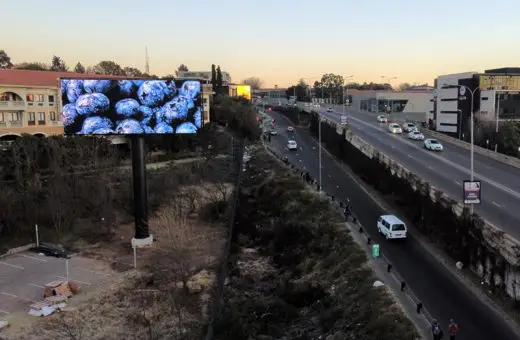
Why Pixel-Level Calibration Matters for LED Billboards
Each LED billboard consists of thousands, sometimes millions of pixels. A pixel is the smallest unit of light on the screen, typically made of red, green, and blue diodes. These tiny elements work together to form images and video that viewers see from distances ranging from a few feet to hundreds of meters away. The uniformity of color and brightness across these pixels directly affects how clear and vibrant the imagery appears on a large digital billboard.
Pixel-level calibration is the process of measuring and adjusting brightness and color for each individual pixel on an LED display. Because LEDs can vary slightly in output due to manufacturing variances, heat, aging, and environmental conditions, calibration helps ensure that each pixel reproduces the intended hue and intensity. This leads to smoother visuals with consistent color across the entire surface of the billboard, improving readability and audience perception.
How Chainzone Implements Calibration for Clearer Screens
Chainzone’s range of LED billboard solutions integrates advanced display technologies that support fine-grained diagnostics and control. These capabilities allow calibrators to access pixel-level data and detect inconsistencies in real time. By analyzing and correcting outputs at this detailed level, the system improves visual coherence and minimizes areas of uneven brightness or color drift that can occur over time.
Through digital management platforms, operators can monitor billboard health and performance across multiple screens. These systems can highlight pixel-level anomalies, assisting maintenance teams in making targeted adjustments without unnecessary replacement of entire modules. This efficient approach helps extend the lifespan of LED billboards while maintaining high visual quality.
Benefits Beyond Visual Fidelity
Fine-tuning at the pixel level doesn’t just enhance image quality; it also contributes to operational efficiency. When all pixels perform within expected parameters, content appears more consistent, and fewer manual interventions are required. This reliability supports prolonged campaigns on LED billboards with minimal downtime. Additionally, improved clarity can help ads engage viewers more effectively, whether in busy urban corridors or at major event venues.
Conclusion
Pixel-level calibration is a fundamental process in achieving high-quality visuals on digital billboards and LED billboards. By addressing each pixel’s output, display systems like those offered by Chainzone ensure uniform brightness, accurate color reproduction, and reliable performance in outdoor advertising environments. As outdoor screens become larger and more central to brand messaging, precision at the pixel level helps maximize both visual impact and long-term value for advertisers and audiences alike.


