
Diving into a subterranean expressway at eighty kilometers per hour confronts motorists with immediate physiological stress. Human retinas cannot instantaneously recalibrate between blazing outdoor daylight and artificial portal illumination, creating a momentary perceptual blind spot where road hazards disappear.
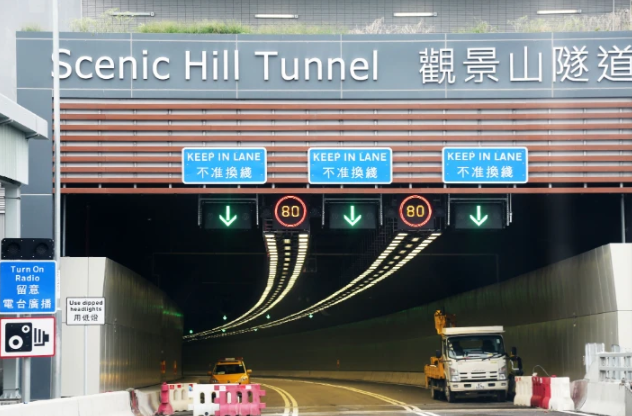
Motorists trapped inside concrete tubes lose peripheral escape paths, transforming ordinary stalls into acute bottleneck risks. Without clear, anticipatory guidance, slight braking ripples cascade backward through confined corridors, generating severe accordion collisions and paralyzing metropolitan transit arteries.
Deploying specialized digital signage solutions bridges this perceptual divide by replacing static metal markers with dynamic optical intelligence. Responsive messaging gives drivers the split-second clarity required to navigate subterranean geometry safely under variable traffic conditions.
Conquering Retinal Adaptation at Tunnel Portals
Daylight fading abruptly at tunnel portals triggers physiological pupil lag, commonly recognized by highway engineers as the black hole effect. Approaching drivers instinctively hit the brakes if the entrance appears as a pitch-black void, creating dangerous velocity differentials across busy approach lanes.
Mitigating the black hole effect primarily requires appropriate tunnel entrance lighting that accounts for exterior luminance. Portal variable message signs complement this lighting by communicating speed limits, lane status, and hazard warnings before drivers enter the tunnel.
Tunnel lighting systems can adjust entrance-zone illumination according to exterior brightness and gradually reduce luminance through transition zones. Separately, variable message signs can adjust their display brightness to maintain appropriate message visibility.
Dynamic Lane Discipline and Shockwave Suppression
Overhead lane allocation dictates whether underground traffic flows smoothly or grinds to a sudden halt. Suspended directly above each active travel lane, illuminated green arrows and red crosses provide unambiguous boundary control during sudden lane closures, debris clearance, and routine maintenance sweeps.
At Chainzone, our engineering teams integrate lane control signals with traffic control systems to support responsive lane status updates and coordinated traffic management. Dynamic visual guidance can help redirect approaching traffic toward available lanes upstream of disabled vehicles, potentially reducing the need for abrupt lane changes in tunnels with limited shoulder space.
Variable speed limit indicators placed every few hundred meters compress traffic shockwaves before congestion solidifies. Dynamically lowering posted speeds as downstream traffic volumes peak harmonizes vehicle spacing, minimizes stop-and-go turbulence, and measurably lowers noxious idling emissions inside the bore.
Linking every display system directly to optical incident detection cameras creates an autonomous safety loop throughout the tube. Roadside algorithms detecting stopped vehicles or pedestrians instantly trigger flashing caution pictograms, warning following drivers before human dispatchers even pick up an alarm.
Metallurgical and Thermal Defense Against Corrosive Atmospheres
Airborne diesel soot, sulfurous exhaust, unburnt hydrocarbons, and saline road spray turn underground air into a conductive, chemically aggressive fog. Standard commercial housings deteriorate rapidly in this caustic microclimate, suffering terminal trace corrosion, component short-circuits, and catastrophic faceplate clouding.
Protecting sensitive driver electronics requires durable enclosures with appropriate ingress protection. Chainzone offers aluminum-housed display solutions with IP65 or IP66 protection options, depending on the product model, to help limit dust and water ingress. Continuous robotic silicone gasketing seals internal micro-controllers away from moisture penetration, preserving electrical isolation through decades of unyielding humidity and chemical exposure.
High-pressure washing rigs routinely blast tunnel walls with alkaline detergents and water cannons to strip away accumulated grime. Heavy-duty structural brackets and toughened front shields withstand intense hydraulic impact without structural deformation, moisture ingress, or optical misalignment.
Fanless convective heat management protects sensitive internal processors from airborne contamination. Exterior cooling fins channel heat away through natural conduction, helping reduce mechanical intake fans that would otherwise suck corrosive particulate matter across internal printed circuit boards.
Zero-Visibility Evacuation Guidance and Automated Life Safety
Catastrophic events such as vehicle fires turn confined tubes into pitch-black smoke chambers within minutes. Toxic smoke rises and stratifies along the ceiling, completely obscuring elevated gantry signs and leaving trapped occupants in disorientation.
Low-mounted egress signs illuminated by solid-state LED arrays cut through thick thermal stratification near the roadway floor. High-contrast running-man symbols and exact metric distance readouts guide evacuees directly toward pressurized cross-passage shelters, providing unyielding directional clarity when overhead lighting fails.
Chainzone provides tunnel traffic management solutions that integrate traffic guidance, monitoring, emergency support, and centralized control systems. Its variable message signs (VMS) and lane signs enable operators to communicate real-time traffic updates, lane guidance, and emergency instructions, supporting coordinated traffic management and incident response in tunnel environments.
Our digital signage solutions at Chainzone support the clear presentation of operational information across a range of applications. In transportation environments, connected display systems can deliver timely updates and guidance to help operators communicate changing conditions and important instructions to the public.
Optical Precision Amid Dense Artificial Reflections
Glossy perimeter tiles and sodium luminaires produce relentless visual clutter inside curved subterranean passageways. Stray artificial light bouncing off ceramic surfaces washes out low-contrast displays, obscuring crucial regulatory guidance behind blinding glare halos.
Patented micro-lenses collimating light forward stop peripheral bounce before it strikes surrounding walls. Channeling emitted photons directly toward driver eye boxes preserves deep background contrast, ensuring dynamic signs fulfill EN 12966 Class R3 visibility benchmarks under severe artificial wash.
Operating an intelligent display system preserves strict EN 12966 Class C2 chromaticity across every red, green, and amber indicator. Rigid diode binning prevents chromatic drifting, ensuring motorists distinguish stop signals from permissive arrows without split-second hesitation.
Sustained Subterranean Reliability and Economic Resilience
Halting traffic to replace failed electronics inside an active tube carries immense financial penalties and severe grid paralysis. Municipalities cannot afford visual hardware that requires frequent bucket-truck access or prolonged tunnel lane shutdowns for component maintenance.
Modernizing subterranean thoroughfares with resilient digital signage solutions protects municipal balance sheets by slashing roadside interventions. Modular architectures equipped with front-serviceable power packs and hot-swappable tiles allow service technicians to complete preventative maintenance within tight overnight maintenance windows.
Demanding environments require reliable visual communication and durable display performance. Optical collimation, internal thermal monitoring, and environmental sealing are designed to support signal visibility, thermal management, and protection against environmental exposure. These features can contribute to the reliable operation of display systems in subterranean transit environments, as part of a broader approach to infrastructure safety and operational management.
Our manufacturing roadmap at Chainzone unites optical precision, sealed metallurgy, and automated fail-safes into durable roadway equipment. Underground transit networks demand relentless operational discipline, and purpose-built visual technologies ensure that critical guidance remains unwavering when visibility matters most.
Securing an advanced display system ultimately safeguards thousands of daily commuters navigating complex metropolitan underpasses. Reliable visual execution keeps subterranean traffic flowing smoothly, mitigates disaster risks, and delivers lasting infrastructure protection across every subterranean kilometer.


