
LED display certifications and compliance requirements can affect market access, project acceptance, and product approval. Traffic VMS shares some electrical, EMC, and market-access requirements with commercial LED displays, but it also follows road-traffic-specific standards such as EN12966 in Europe and NEMA TS 4 in North America.
The required conformity marks and standards therefore depend on both the product type and destination market. This guide explains the major LED display certifications and compliance standards and how to match them to different project requirements.
- Traffic VMS and commercial LED displays share some baseline compliance requirements, but VMS also follows dedicated road-traffic standards.
- Market destination drives mandatory requirements: CE marking applies to products covered by relevant EU legislation, while applicable digital devices in the U.S. must meet FCC equipment-authorization requirements.
- EN12966 is a key European product standard for road traffic VMS, while NEMA TS-4 provides hardware requirements for dynamic and variable message signs in North America.
- UL and ETL are associated with product safety certification through OSHA-recognized Nationally Recognized Testing Laboratories (NRTLs), subject to the applicable product standard and installation requirements.
- Missing or invalid compliance documentation can create problems during product approval, installation, or project acceptance.
Overview: Major LED Display Certifications and Compliance Standards
| Certification / Standard | Region / Market | Product Type | What It Covers |
| EN 12966 | EU Member States (and select European countries) | Traffic VMS | Optical performance, environmental durability, structural integrity, EMC. Harmonized European standard for road VMS; mandatory where cited in national legislation across EU member states. |
| NEMA TS-4 | North America (primarily U.S.) | Dynamic Message Signs (DMS) | Environmental durability, electrical performance, communication protocols (NTCIP). Industry consensus standard; commonly referenced in U.S. transportation procurement. |
| CE Marking | European Economic Area (EEA) | All products | Mandatory compliance mark for EU market access. Self-declaration covering safety (LVD), EMC, environmental and other directive requirements. |
| EMC | Global (technical requirement) | All LED displays | Electromagnetic emission limits and immunity performance. Typically verified as part of CE, FCC, or CCC compliance rather than a standalone certification. |
| UL | North America | All LED displays | Electrical safety, fire safety, component reliability, and construction integrity. NRTL certification widely recognized in the U.S. |
| ETL | North America | All LED displays | Electrical safety certification (NRTL). Functionally equivalent to UL and recognized in the U.S. and Canada. |
| FCC | United States | All electronic devices | Radiated and conducted electromagnetic emission limits for RF energy. LED displays are classified as unintentional radiators under FCC Part 15 Class A (commercial/industrial). Mandatory for electronic products sold in the U.S. |
| CCC | China | Products within CCC catalog (including certain LED displays) | Compulsory safety certification for the Chinese domestic market. Some categories may use Self-Declaration of Conformity (SDoC) instead. |
| TÜV | Global (German testing brand) | Electrical and electronic equipment | Independent third-party safety and quality testing. Voluntary certification services provided by TÜV organizations worldwide. |
| RoHS | Global (originated in EU, adopted widely) | Electrical and electronic equipment | Restriction of ten hazardous substances in electronic equipment (including lead, mercury, cadmium, hexavalent chromium, PBBs, PBDEs, and four phthalates). Mandatory in EU and many other markets. |
Traffic VMS-Specific Standards and Certifications
1. EN12966
EN12966 is the European standard for variable message traffic signs (VMS). It grades signs across six performance dimensions:
- Luminance (L): L1 to L3(T) — visibility across all ambient light conditions, including direct sunlight
- Color (C):C1 to C2 — C1 for limited colors, C2 for full color.
- Beam width (B): B1 to B7 — viewing angle matched to road geometry and driver approach
- Contrast ratio (R): R1 to R3 — readability against bright backgrounds
- Operating temperature(T): T1 to T3 — ambient temperature range
- Ingress protection (P): P1 = IP44, P2 = IP54, P3 = IP56 — P3 is the most restrictive class
The standard also covers structural integrity, operating temperature range (T1 at −15°C to +60°C up to T3 at −40°C to +40°C), and EMC. EN12966 is typically required for European highway, tunnel, and smart-city traffic projects.
2. NEMA and NTCIP
NEMA TS-4 is the North American standard for highway VMS, covering electrical performance, environmental durability, and sign construction. It references NTCIP for communication protocol compliance.
NTCIP defines how VMS equipment communicates with traffic management centers — it is a protocol standard, not a safety certification. Without NTCIP support, a physically installed sign may be unable to integrate with the control network.
NEMA enclosure types define physical protection levels used in North American tenders: Type 4 ≈ IP56; Type 4X≈ IP66, adds corrosion resistance; Type 6 ≈ IP67.
General LED Display Certifications
3. CE
CE marking is mandatory for products sold in the European Economic Area. For LED displays, it covers the Low Voltage Directive (electrical safety), EMC Directive, and RoHS Directive. CE is a declaration of conformity — verify the supplier holds a valid Declaration of Conformity (DoC) listing the specific product model.
4. EMC
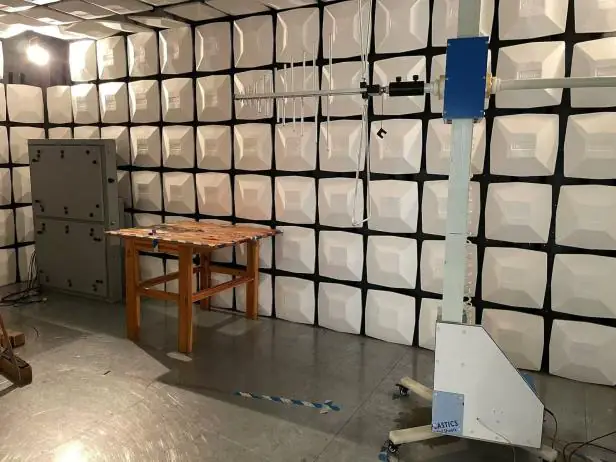
EMC confirms that a display does not emit electromagnetic interference beyond permitted limits and can withstand external interference. LED displays are high-risk EMC products: power supplies, control cards, data cables, and thousands of LED modules all generate interference. Poor EMC can affect nearby traffic sensors, communication systems, and broadcast equipment. EMC is tested as part of CE (EU), EN12966 (traffic VMS), and FCC Part 15 (US).
5. UL and ETL
UL and ETL are both issued by OSHA-recognized Nationally Recognized Testing Laboratories (NRTLs) and are legally equivalent in most US jurisdictions, covering electrical safety, fire safety, and construction reliability. UL is more widely recognized by name; ETL (Intertek) is accepted by most authorities having jurisdiction (AHJ). Confirm the preferred mark with the AHJ before specifying.
6. FCC
FCC compliance is required for all electronic devices sold or operated in the United States that emit radio frequency energy. LED displays fall under FCC Part 15 Class A (commercial/industrial). Non-compliant products can be held at customs or ordered removed from service.
7. CCC, TÜV, and RoHS
CCC is mandatory for products within China’s compulsory certification catalog; large-scale commercial LED displays may fall outside the mandatory scope — confirm by product category. It is not recognized as an equivalent to CE or UL in other markets.
TÜV (TÜV Rheinland or TÜV SÜD) provides independent third-party safety testing. It is not always mandatory but adds credibility in European and Middle Eastern projects where self-declared CE compliance may be scrutinized.
RoHS restricts ten hazardous substances in electronic equipment: lead, mercury, cadmium, hexavalent chromium, PBB, and PBDE (original six), plus four phthalates — DEHP, BBP, DBP, and DIBP — added under the 2015 amendment. Required for EU market entry and increasingly specified in public procurement globally.
How to Choose the Right Certifications for Your Project
1. Traffic VMS vs. Commercial LED Display
| Certification | Traffic VMS | Commercial LED Display |
| EN12966 | Required (EU) | Not applicable |
| NEMA TS-4 / NTCIP | Required (North America) | Not applicable |
| CE | Required (EU) | Required (EU) |
| EMC | Required | Required |
| UL / ETL | Required in practice (NRTL listing; not federally mandated, North America) | Required in practice (NRTL listing; not federally mandated, North America) |
| FCC | Required (US) | Required (US) |
| RoHS | Required (EU) | Required (EU) |
| CCC | Required (China, for products within CCC catalog) | Required (China, for products within CCC catalog) |
| TÜV | Recommended | Recommended |
2. Match Certifications to Market and Environment
- EU projects: CE, RoHS, and EN12966 (for VMS) are mandatory. TÜVstrengthens proposals for public tenders.
- US / North American projects: FCC compliance is mandatory. UL or ETL safety certification is required in practice for commercial installation and AHJ approval. Traffic VMS also requires NEMA TS-4 and NTCIP compliance per standard procurement specifications.
- China: CCC is required for domestic sale or installation of products within the CCC catalog; confirm applicability by product category.
- Multi-market: Choose suppliers holding multiple certifications to avoid per-market re-testing delays.
3. Verify Documentation Before Ordering
Before placing an order, request: current certificates with issue and expiry dates; product model numbers listed within each certificate; test reports from accredited laboratories; Declaration of Conformity (CE DoC) and FCC Supplier’s Declaration of Conformity (SDoC); and certification scope confirmed against your specific product configuration.
FAQ: Chainzone LED Display Certifications
1. What certifications does Chainzone hold?
Chainzone holds CCC, EN12966, CE, EMC, UL, ETL, FCC, TÜV, and RoHS certifications — covering both traffic VMS and commercial LED display product lines across European, North American, Chinese, and international markets.
2. Can Chainzone configure products to match specific project certification requirements?
Yes. Chainzone can match certified products to specific market and project requirements — EN12966 for a European highway tender, NEMA TS-4 and ETL for a North American transportation authority, or CE and RoHS for EU public procurement. Confirm the required certification scope with Chainzone before production, as requirements vary by product model and destination market.
3. What IP ratings are available across Chainzone’s product range?
- VMS (L-Series, M-Series): IP44, IP54, IP56 (EN12966 P1–P3), with optional IP65 and IP66
- Lane Control Signs (LCS), Speed Limit Signs (SLS): IP56 and IP65; LCS housings use full-weld construction with internal stiffeners to prevent water ingress
- Outdoor commercial — V-Plus Series: IP67
- Outdoor commercial — Plus X Series: IP65
4. What is significant about Chainzone’s EN12966 certification?
Chainzone is one of the first manufacturers in China to receive EN12966 certification, achieving this in 2014. Its VMS products reach the standard’s highest performance grades — luminance L3/L3*/L3(T), contrast R3, color C2, and beam widths covering B1 through B7 — using patented spherical optical lens technology.
The lens eliminates the phantom effect caused by sunlight reflection, resists UV degradation, and reduces power consumption by approximately 50% compared to a conventional DIP LED with visor designs at equivalent brightness. Click here to explore more energy-efficient solutions.
Chainzone operates an in-house laboratory covering optical, structural, electrical, and EMC testing to EN12966.
Key Takeaways
- Traffic VMS and commercial LED displays share some regulatory requirements, but VMS also follows dedicated road-traffic standards.
- EN12966 is a key European VMS product standard, while NEMA TS-4 provides hardware requirements for North American dynamic and variable message signs.
- CE, EMC, UL/ETL, FCC, CCC, TÜV-related testing, and RoHS represent different types of conformity, safety, regulatory, or testing requirements and should not all be treated as identical certifications.
- Required documentation depends on the destination market, exact product model, installation, and project specification.
- Chainzone holds certifications and compliance credentials including CCC, EN12966, CE, EMC, UL, ETL, FCC, TÜV, and RoHS for ourapplicable LED display products. For VMS applications, Chainzone also develops and integrates our own control systems, with support for major traffic communication protocols such as NTCIP, RSMP, NMCS2, and TLS to meet different regional project requirements.


