
Selecting an effective visual display begins with recognizing that light-emitting diode technology is not a monolithic category. Different operating environments require distinct optical architectures, mechanical enclosures, pixel configurations, and real-time control capabilities.
Deploying highway signage demands vastly different engineering standards than outfitting an indoor corporate auditorium or a sports arena. Classifying displays by manufacturing architecture, optical performance, and operating environment reveals the right solution for specific project requirements.
Core Diode Packaging and Physical Architectures
Diode packaging establishes the primary physical division among visual displays. Dual In-line Package (DIP) components feature individual red, green, and blue diodes encased in epoxy bulbs, delivering high brightness and rugged weatherproofing suited for long-distance outdoor viewing.
Surface-Mounted Device (SMD) packaging combines red, green, and blue diodes inside a singular miniature housing soldered directly onto the circuit board. Offering tighter pixel density and wider viewing angles, SMD serves as the standard foundation for indoor and outdoor commercial platforms.
Chip-on-Board (COB) technology mounts LED chips directly onto a circuit board beneath a protective layer, making it suitable for applications requiring fine pixel pitches. Another approach is Lens-on-Board (LOB) technology, which integrates optical lenses into the LED display design to improve light utilization, contrast, and energy efficiency.
Evaluating these packaging types clarifies how an LED screen achieves target resolution and environmental endurance. Pixel pitch, measured as the millimeter distance between diode centers, establishes the minimum optimal viewing range and separates close-proximity indoor setups from expansive outdoor installations.
Intelligent Transportation Displays and Critical Traffic Signage
Roadway networks rely on mission-critical displays categorized under Intelligent Transportation Systems (ITS). Variable Message Signs (VMS) communicate dynamic speed limits, lane closures, weather advisories, and detour routes to motorists navigating at high highway speeds.
Engineers evaluate traffic display hardware through strict visibility and safety benchmarks. At Chainzone, we build dynamic road messaging systems to satisfy EN 12966 standards, ensuring high luminance contrast, precise beam angles, and clear legibility through heavy fog, driving rain, and bright sunlight.
Beyond conventional highway VMS, intelligent traffic display solutions also include lane signs, tunnel guidance displays, and parking guidance signs. These systems help traffic operators communicate lane restrictions, road conditions, and parking information more effectively.
Chainzone’s VMS products feature integrated light sensors for automatic brightness adjustment and temperature monitoring. Combined with centralized management capabilities, these functions help operators monitor display conditions and maintain appropriate visibility throughout changing operating environments.
Transit hubs utilize dedicated passenger information boards across railway platforms, bus terminals, and smart parking facilities. Providing live schedule feeds and vacant bay counts improves traveler movement while establishing reliable, continuous-duty digital signage across municipal infrastructure.
High-Luminance Outdoor Commercial Billboards
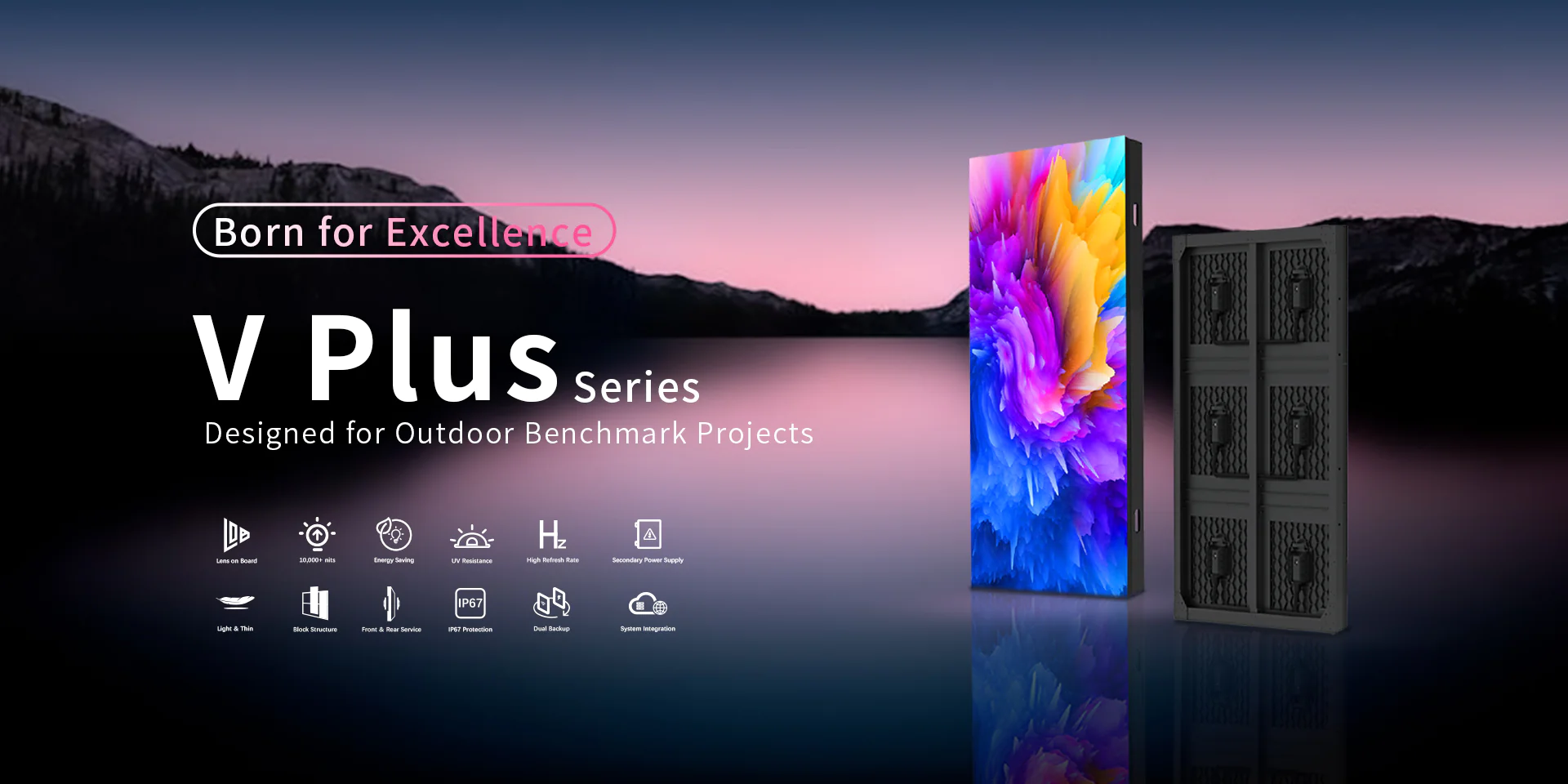
Commercial out-of-home advertising represents the largest physical category of outdoor visual platforms. Outdoor commercial LED billboards are widely used in DOOH advertising, roadside promotions, and large-scale information displays. Chainzone’s V-Plus Series supports outdoor applications with brightness levels of up to 10,000 nits and a refresh rate of up to 7,680 Hz.
Constructing a resilient outdoor LED screen demands heavy-duty aluminum or magnesium alloy cabinetry rated at IP65 or IP67. Encapsulating delicate electronics shields modules against wind-driven precipitation, airborne contaminants, and intense ultraviolet degradation over prolonged outdoor lifecycles.
Thermal management is particularly important for outdoor LED displays exposed to prolonged sunlight. Chainzone’s V-Plus Series features a secondary power supply design that helps reduce heat on the screen and improve operational reliability. Its LOB technology also supports efficient light utilization and lower power consumption.
Modular cabinet designs can simplify installation and maintenance for large outdoor LED display projects. Combined with integrated management software, operators can monitor display status and coordinate maintenance tasks more efficiently
Ultra-Fine-Pitch Indoor Video Walls and Control Centers
Mission-critical control centers, broadcast stages, and corporate facilities require high-resolution displays engineered for close inspection. Fine-pitch video walls utilize sub-two-millimeter diode spacing, delivering crisp data visualization and razor-sharp imagery without visible pixel grids to nearby operators.
Traffic monitoring hubs and emergency operations rooms depend on continuous data streams across extensive visual surfaces. Replacing segmented LCD panels with seamless modular LED tiles eliminates bezel lines, empowering dispatchers to track complex road networks, security video, and telemetry maps without visual interruptions.
Executive boardrooms and luxury retail flagships utilize fine-pitch systems for engaging, high-definition digital signage. High refresh rates can help reduce visible flicker and scan-line artifacts when LED displays are recorded by cameras, although results also depend on camera settings and display configuration.
At Chainzone, our LED display solutions also incorporate energy-efficient optical technologies. Our LOB technology improves light utilization and contrast while helping reduce power consumption, supporting more cost-effective display operation.
Specialized Sports Venue and Perimeter Systems
Athletic venues require specialized display hardware engineered for physical impact resistance and athlete protection. Sports venues use perimeter LED displays to deliver advertising and promotional content to spectators. These displays need to balance visual performance with suitable installation and operational safety requirements
High refresh rates are important for sports venue displays, particularly when screens are captured by broadcast cameras. Chainzone’s V-Plus Series offers a refresh rate of up to 7,680 Hz, supporting smooth visual performance for outdoor advertising and sports display applications.
Operational Alignment: Selecting the Right Architecture
Determining the right hardware architecture depends on calculating site parameters rather than simply specifying the smallest available pixel pitch. Evaluating minimum viewing distances prevents excessive capital expenditure where wider diode spacing delivers identical visual acuity.
Environmental demands, servicing access, and optical regulations, such as highway visibility standards, guide final deployment decisions. Pairing durable cabinet enclosures with intelligent control software empowers operators to maintain responsive digital signage networks that perform dependably across years of demanding service.
Deploying a high-performance LED screen ultimately requires harmonizing optical precision with mechanical endurance, a manufacturing benchmark we uphold across every Chainzone installation. Strategic technological alignment guarantees that your display investment delivers uncompromised clarity, operational safety, and sustained lifecycle value.


