
You have likely seen the clip—a giant, hyperrealistic naked-eye 3D LED display featuring a massive panda climbing out of a building in Chengdu, or a colossal 3D cat prowling above the bustling streets of Tokyo’s Shinjuku district. These viral moments are powered by naked-eye 3D LED display technology, known as autostereoscopic or glasses-free 3D.
It creates stunning visual depth perception without requiring the viewer to wear any special glasses or headgear, offering a shared public experience that traditional screens cannot match.
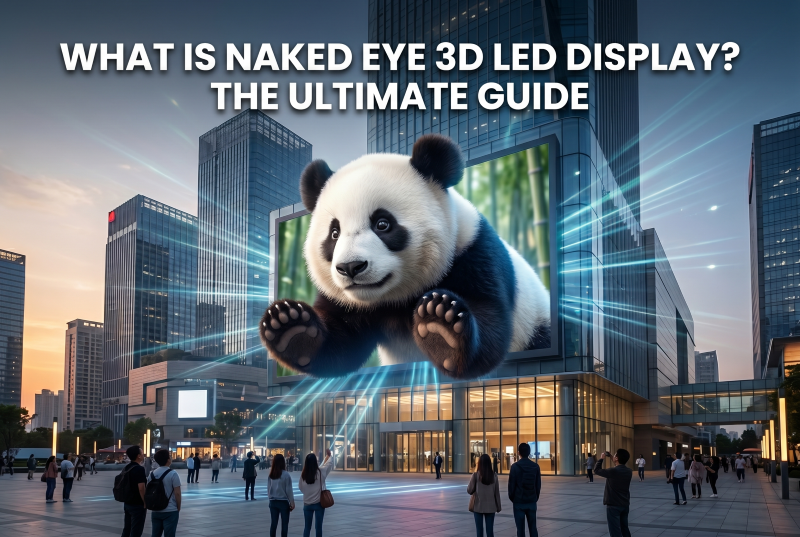
What Is a Naked Eye 3D LED Display? How Does It Work?
A naked-eye 3D LED display is a large-format screen system capable of producing the perception of three-dimensional depth visible to the unaided eye. These screens achieve the perceptional illusion through a combination of screen geometry, optical engineering, and purpose-built creative content.
The foundation of the effect lies in binocular parallax — the natural phenomenon where each eye receives a slightly different view of the world due to the roughly 6.5 cm gap between them. The brain fuses these two offset images to calculate distance and depth. Naked-eye 3D technology exploits this by engineering the visual signals that reach each eye, creating what the brain interprets as a fully dimensional object.
In practice, large-format outdoor 3D LED screens most commonly achieve this through optical illusion and custom content rather than lens-based hardware. The screen’s physical structure — typically an L-shaped corner or curved configuration — places two panels at perpendicular angles. The left panel shows a side view of the subject; the right panel shows the front view. When viewed from the designated sweet spot, the brain naturally assembles these two perspectives into a single three-dimensional form.
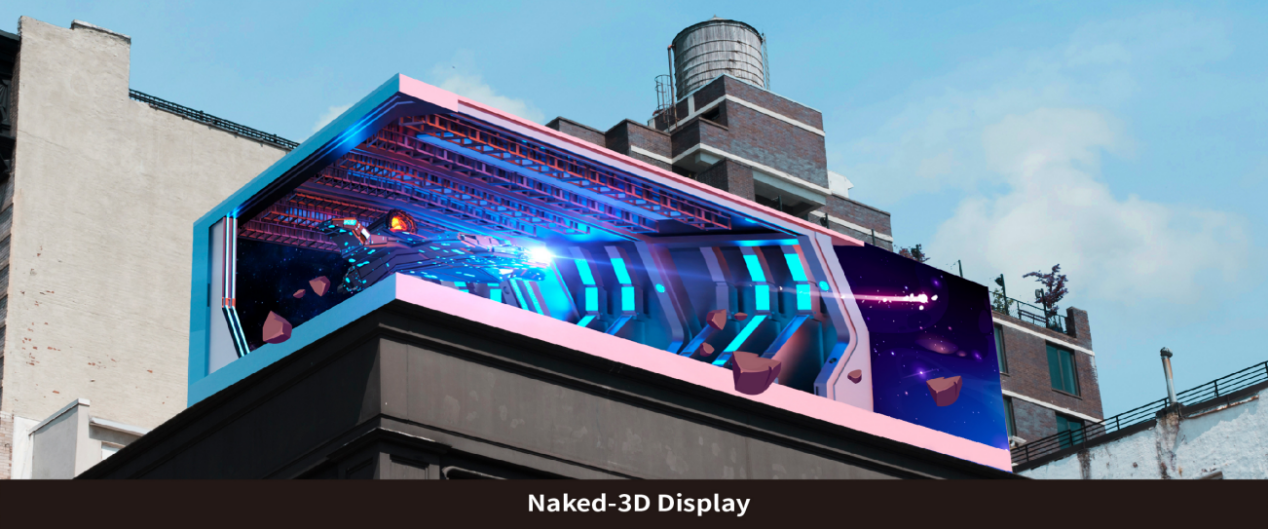
Underlying the illusion further is anamorphic content rendering: the video is deliberately distorted during production so that when viewed from the optimal angle, the distortions cancel out and the image appears perfectly proportioned. Combined with deliberate “out-of-screen” moments — where a subject appears to cross or shatter the physical boundary of the frame — the viewer’s brain is convinced the object exists in real space.
Key Requirements for Naked-Eye 3D LED Display Success
1. Screen Geometry and Setup
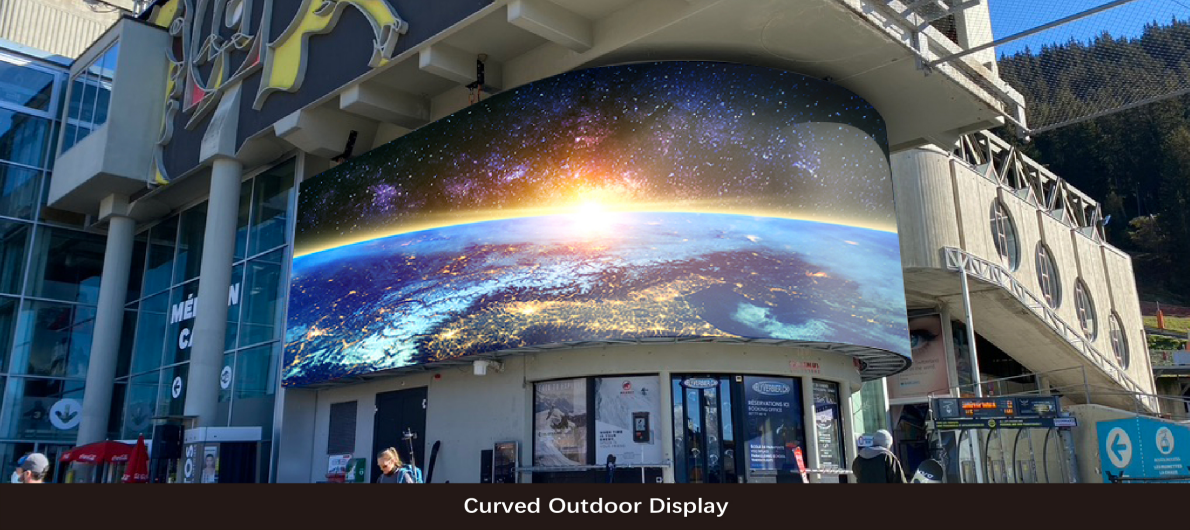
Physical form factor is one of the most fundamental requirements. Many successful high-impact 3D installations use an L-shaped right-angle corner or a smooth curved display. This folded structure gives the content a natural physical stage: the two planes present different viewing perspectives simultaneously, providing the spatial foundation that makes depth illusions convincing.
2. Content Design and Optical Illusions
The 3D effect is usually not inherent to the hardware — it is designed frame by frame. All content must be purpose-built using forced perspective and anamorphic rendering techniques, calibrated to the exact screen dimensions, fold angle, and resolution of the installation.
The breakthrough “out-of-screen” effect is achieved by introducing a visual boundary — physical or virtual — and then having the subject dynamically cross it, triggering the brain’s instinct that an object has broken free of a flat surface.
Internal spatial depth is created through light-and-shadow design and layered perspective, drawing the eye into a virtual three-dimensional space within the screen.
3. Viewing Angle and Distance
Normally, the 3D illusion is engineered for a specific apex viewing angle — a position in front of the screen from which the perspective geometry resolves perfectly. Content and structural design must be planned around the actual pedestrian flow and viewing distances at each site. Straying too far from the optimal viewing cone results in visible distortion.
Viewing distance also directly determines the required pixel pitch: as a general guide, the minimum recommended viewing distance in meters is approximately 1.2 to 1.5 times the pixel pitch in millimeters.
4. High-Performance Hardware Specifications
The naked-eye 3D effect demands uncompromising hardware, including:
- Ultra-high resolution (4K/8K): Crisp edges and fine texture are what make depth cues believable. At lower resolutions, spatial details blur, and the illusion collapses.
- High refresh rate (3840 Hz or above): 3D screens become viral content — audiences film them constantly. A refresh rate of 3840 Hz or higher eliminates scan lines, flicker, and rolling shutter artifacts in smartphone footage, ensuring every shared video looks as stunning as the live experience.
- High grayscale and contrast: 16-bit grayscale and a high contrast ratio — typically 10,000:1 or better — are essential for rendering the subtle shadow and highlight gradients that create perceived depth. Depth lives in the details of light transition.
- Ultra-high brightness (outdoor screens): Outdoor 3D displays must overcome direct sunlight. Brightness in the range of 6,000 to 10,000 nits is the standard target, though output must be carefully calibrated — overexposure washes out shadows and destroys the depth illusion.
How Much Does a Naked-Eye 3D LED Display Cost?
1. Basic Costs: Hardware and Installation
The cost of a 3D LED display project can range from moderate to substantial, depending on the scale and performance requirements. Several factors directly impact the total cost:
- Screen size: From compact installations under 400 m² to large landmark displays over 800 m², larger display areas significantly increase overall cost.
- Pixel pitch: Smaller pixel pitch delivers better visuals but comes at a premium.
- Technology level: Features like HDR improve visual performance but add to the price.
- Installation complexity: Steel structures and heavy-duty installation equipment increase project costs.
- System components: Control systems, power supply units, and cooling systems all contribute to the total investment.
As a reference:
- Small projects (<400 m²) may cost around $300,000 (CNY2 million)
- Medium projects (400–800 m²) can reacharound $730,000 (CNY 5 million)
- Large projects (>800 m²) mayexceed $1 million (CNY 7 million)
Note: These figures are for reference only. The final investment depends on regional market rates and specific technical configurations, including pixel pitch (P3-P10), brightness, refresh rate, and cabinet material. Additionally, custom structural engineering (e.g., L-shaped or curved designs) and logistics will significantly impact the total project cost.
2. Long-term operational Costs
Content production adds a separate layer of investment. Custom 3D video is typically priced per second of finished content, and a standard 30–60 second creative package is the common minimum order.
Furthermore, hidden long-term costs — including specialist media servers, high-capacity power infrastructure, ongoing energy consumption, and annual maintenance — must be factored into any responsible return-on-investment calculation.
Major Applications and Use Cases Worth the Investment
1. Outdoor Advertising (DOOH) — High-Traffic Landmarks
In locations like Times Square, major city shopping corridors, or transport hubs, a naked-eye 3D LED display is one of the most powerful audience-capture tools available. Research indicates that compared to conventional 2D advertising, immersive 3D visuals can extend viewer attention and increase brand recall and engagement.
For DOOH operators and media owners, the combination of earned media from viral social sharing and premium CPM rates makes landmark 3D installations a compelling commercial proposition.
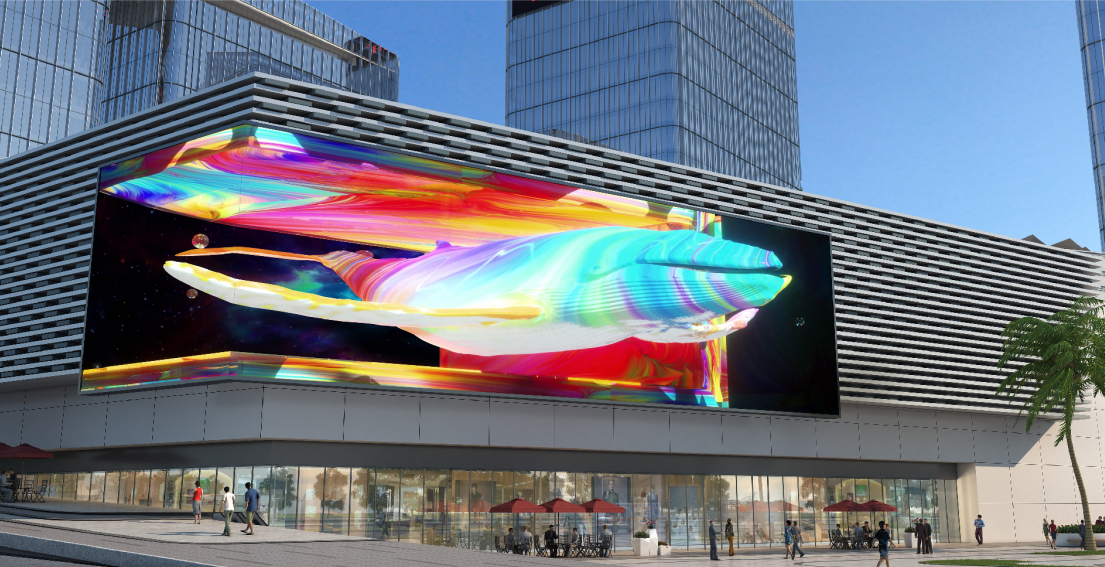
2. Retail and Luxury Branding — Creating “Wow” Moments
Luxury brands have been among the earliest and most effective adopters of 3D LED displays. Whether as a façade feature or an in-mall centerpiece, a curved or corner 3D LED screen delivers cinematic, brand-aligned visual storytelling at a scale that fundamentally elevates the consumer experience.
The ability to precisely reproduce material textures — the sheen of leather, the sparkle of jewelery — while maintaining the brand’s visual language makes this format uniquely suited to premium retail environments.
3. Public Art and City Landmarks — Boosting Tourism
Large-format naked-eye 3D displays are also effective tools for civic identity and tourism activation. Installations that blend local heritage or digital art into monumental public displays consistently become social media phenomena, converting online visibility into measurable footfall and commercial activity for surrounding businesses. The viral “giant panda” and “Shinjuku cat” installations are defining examples of 3D screens functioning as destination attractions in their own right.
4. Events and Exhibitions — Immersive Product Launches
For brand activations, trade shows, and product launches, 3D LED displays deliver the kind of multi-sensory spatial presence that flat-panel or projection solutions simply cannot match.
Arc-shaped or corner-configured screens wrap the audience in a dimensional visual field, transforming passive spectators into immersed participants. When combined with interactive technologies such as motion sensing or augmented reality, the result is a branded environment that drives both immediate engagement and long-term memory retention.
Go to Chainzone for Great Naked-Eye 3D LED Displays
For operators and investors evaluating a 3D LED display project, hardware quality and supplier reliability are not afterthoughts — they are central to the long-term return on investment. Chainzone, founded in 2000 and now operating across more than 120 countries, is a globally recognized manufacturer of large-format digital signage and intelligent display solutions.
For example, our Chainzone Plus 4 is a purpose-built outdoor DOOH solution for a successful 3D LED screen installation:
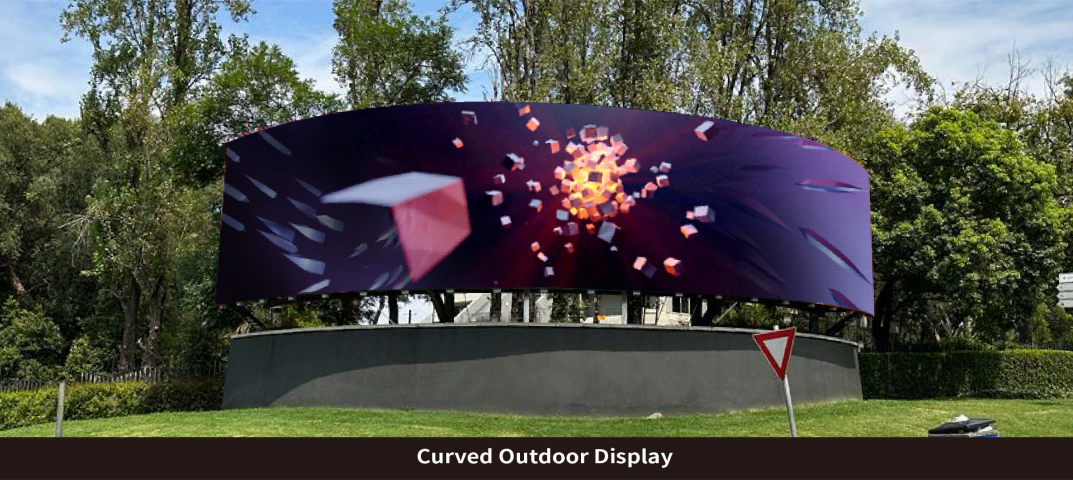
- Multi-shape flexibility — supports both right-angle corner and curved configurations, the two structural formats essential for delivering the depth stage that naked-eye 3D demands
- 7,000–9,000 nits brightness — sustains vivid, shadow-rich 3D imagery through peak daylight hours
- 3840 Hz refresh rate — eliminates scan lines and flicker when filmed by smartphones, directly supporting viral shareability
- 16-bit greyscale — preserves smooth color gradients and deep shadow detail for convincing spatial depth
- IP65 protection — rated for all-weather outdoor deployment
- Front and rear maintenance access — critical for complex architectural structures where rear access may be constrained
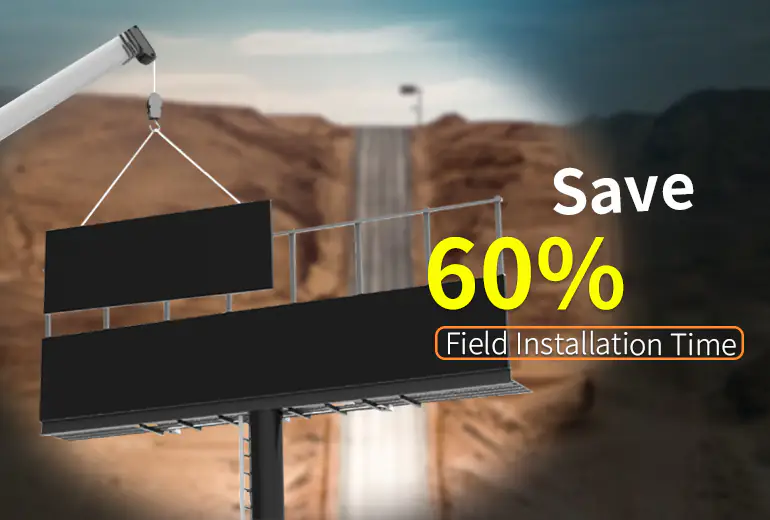
- Lightweight, standardized cabinet design — reduces installation time, shortens lead times, and simplifies long-term servicing
Final Thought
Whether you are planning a landmark installation, a retail flagship experience, or a citywide digital advertising network, the performance requirements of naked-eye 3D LED displays are strict. Chainzone has the engineering depth, global track record, and product range to meet them. If you need any support in your project, do not hesitate to contact us and see what we can do for you!


