
When it comes to stadium LED display installations, one critical factor that influences performance and visual quality is the refresh rate of the screen. For venues hosting fast-paced competitions and live broadcasts, the screen must handle dynamic motion without flicker or distortion. Chainzone’s approach to LED screen technology puts emphasis on achieving refresh rates that meet the demands of sports environments while maintaining clear visuals for both attendees and broadcast coverage.
Understanding Refresh Rate in LED Screens
In LED technology, refresh rate refers to how many times per second the display updates its image, measured in hertz (Hz). A higher refresh rate means the screen redraws the visual content more frequently, which reduces visible flicker and results in smoother motion. This is especially important in sports venues where action unfolds rapidly and content is meant to be engaging from all viewing angles.
For many general digital signage applications, refresh rates around 1920 Hz can suffice. However, in stadium scenarios where live replays, player movements, and switching graphics dominate, a refresh rate of at least 3840 Hz or higher is recommended. This level of performance minimizes scan lines and flickering that could distract fans or affect camera recordings used in broadcast feeds.
Why High Refresh Rates Matter for Sports LED Display
Better Motion Clarity: Sporting events are full of rapid motion. Whether displaying a close-up replay of a goal or animating a team logo on a perimeter board, the LED display must render every frame clearly. A high refresh rate ensures motion appears fluid, with fewer artifacts such as ghosting or blur that can occur at lower frequencies.
Enhanced On-Camera Performance: Stadium LED screens are often filmed for television or livestreams. Lower refresh rates can create visible flicker or dark bands when a screen is captured by a camera sensor. By raising the refresh rate, screens become more compatible with broadcast equipment, allowing dynamic visuals and replay content to appear stable on camera without distracting visual noise.
Superior Spectator Experience: Fans seated throughout a venue should see consistent quality regardless of their position. High refresh rates contribute to image stability, making instant replays and live content easier to follow. This enhances the overall sports LED display experience by ensuring visuals match the energy and pace of the event.
Chainzone‘s Approach to Refresh Rate Standards
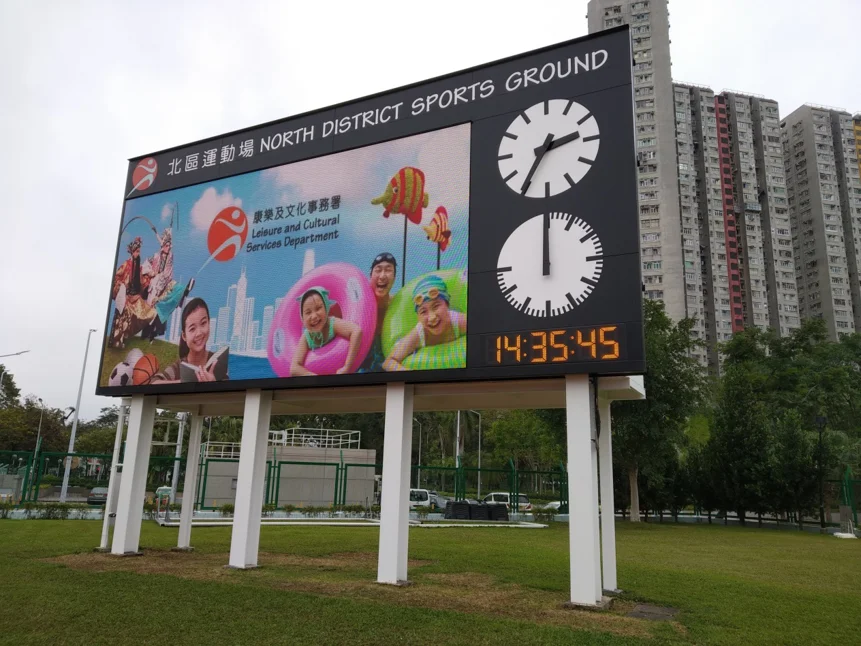
Chainzone integrates advanced LED technology into its sports display solutions for stadiums, including perimeter, ribbon, and scoreboard displays designed to perform reliably in demanding environments. Their LED screens are engineered to support high refresh rates, which helps deliver smooth, flicker-free visuals that are suitable for both live audiences and camera capture.
Conclusion
High refresh rate standards play a vital role in the effectiveness of stadium LED display systems and sports LED display installations. By selecting technology capable of higher hertz performance, venues can provide clearer motion, reduced flicker on camera, and a visually comfortable experience for all viewers. Chainzone‘s LED solutions are built to meet these needs, offering screens that perform consistently in the fast-moving world of sports events.


